Tuesday, March 21, 2023

Oman 6: Time in the Wahiba Sands: Driving the dunes and baby camels

     After breakfast the next morning, I pushed Miles to join the others to go milk the goats.  I had him go on his own because I felt that he would just cling to me and be grumpy if I came along.  Twenty minutes later, he came running back, having raced the camp owner from the goats.  One of the couples took pictures of Miles, and took my info down, but I have yet to receive anything from them.  He tried milking a goat and learned to write his name in Arabic, in the sand.


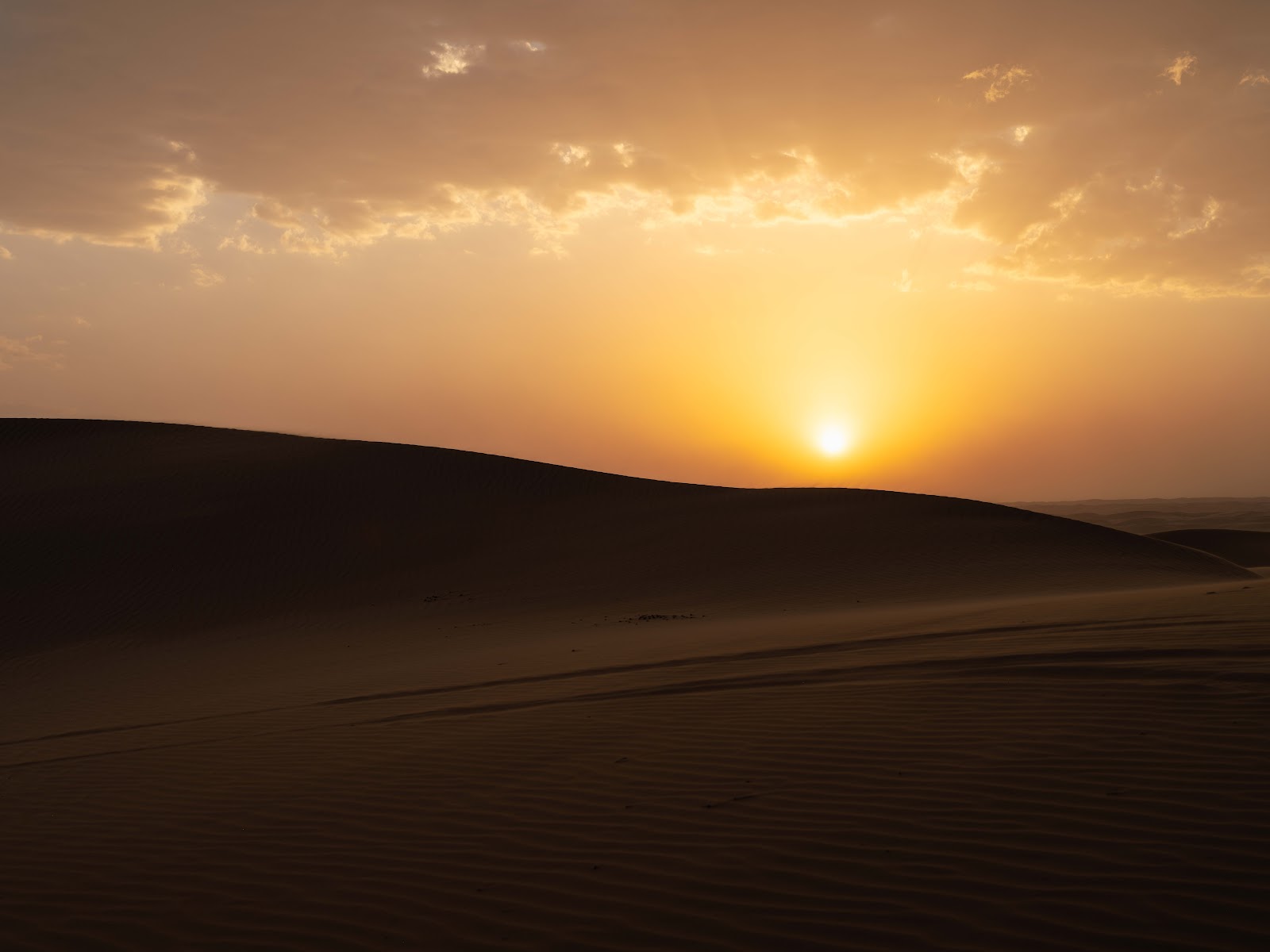
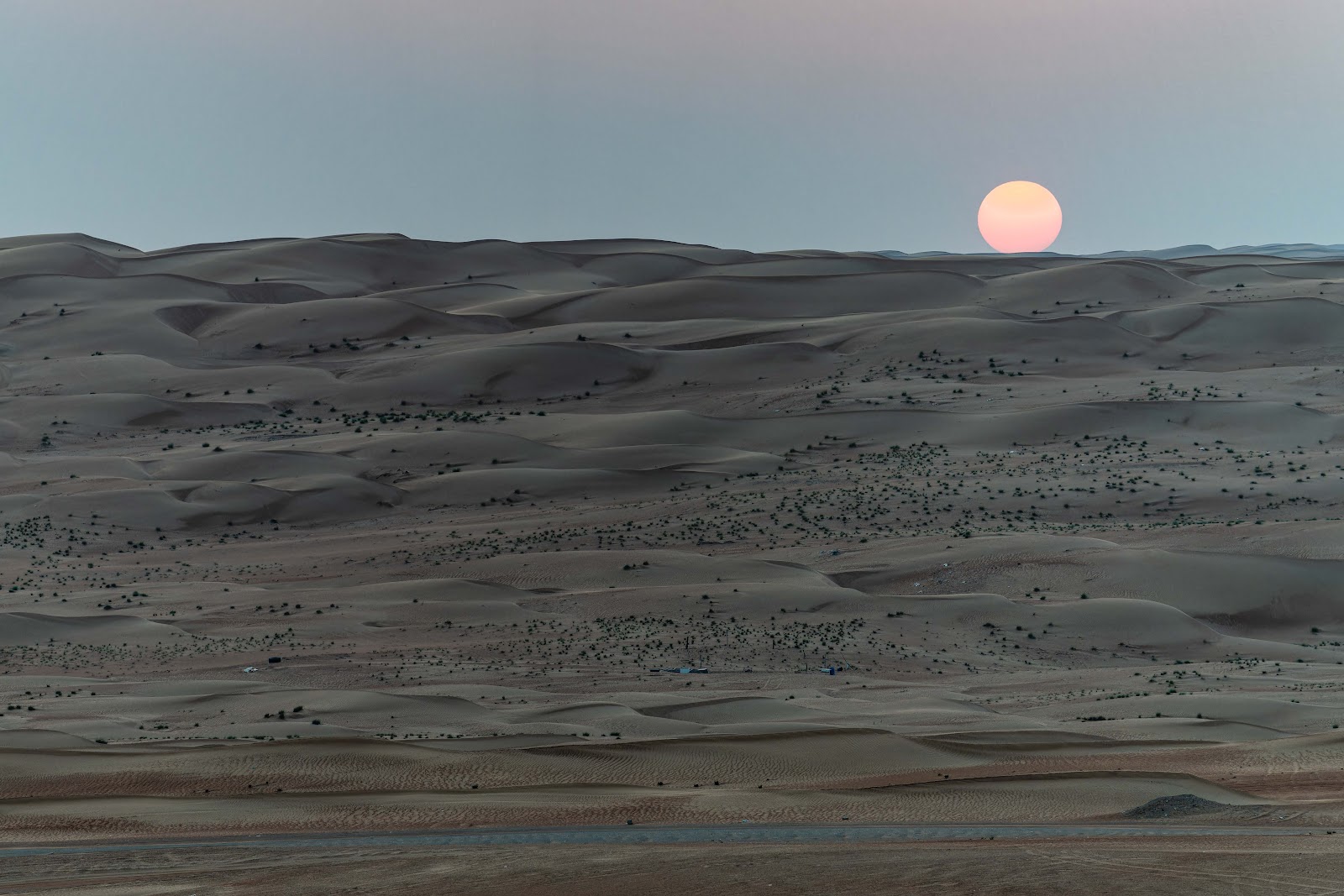
  I spent the day doing yoga in the community room, playing handheld games, and just relaxing.  An hour before sunset, we spent an hour being driven around the dunes in a vehicle by the owner's son who had run the campfire chat the night before.

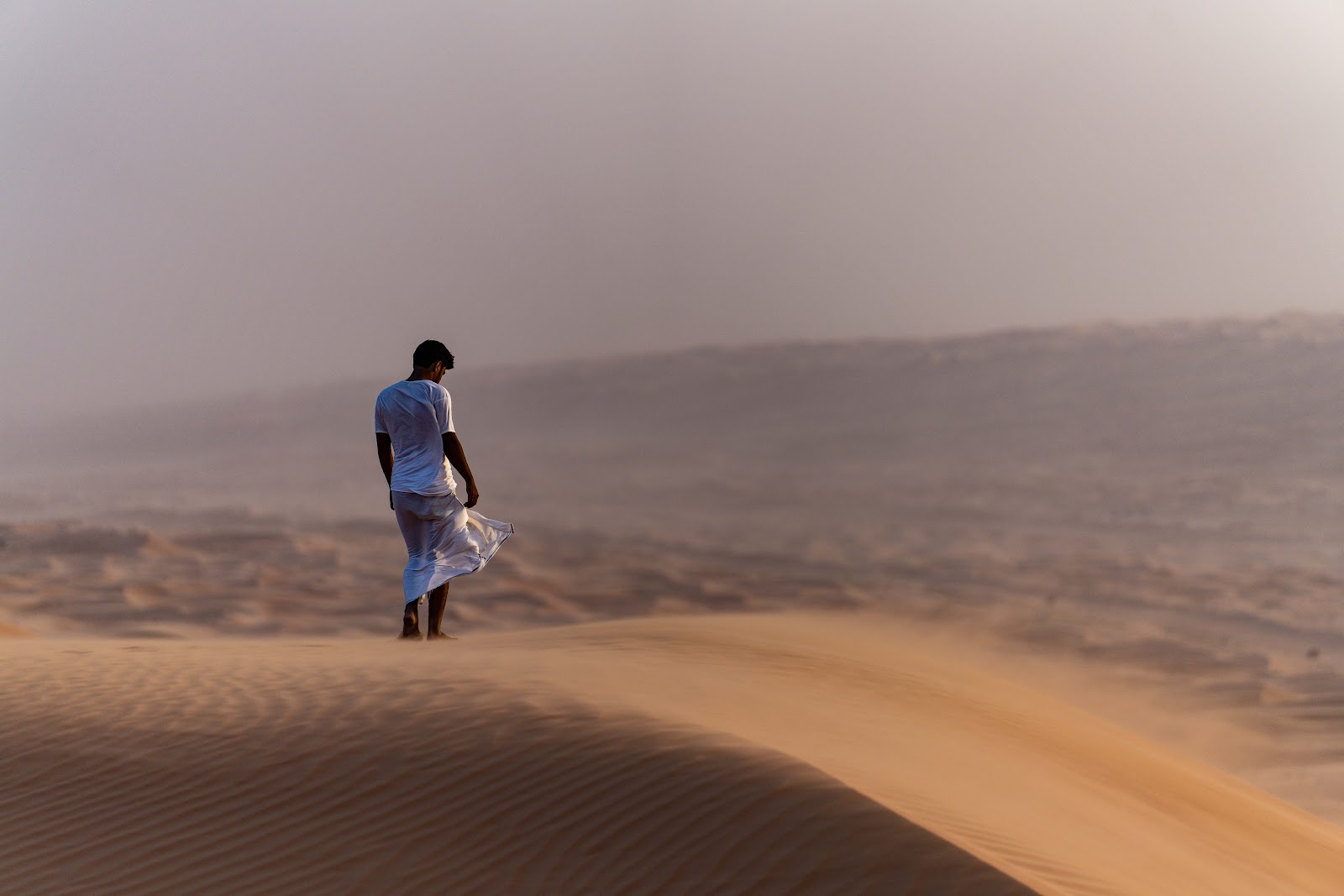
  At one point, he let me out of the car so I could film him driving Miles around in the front seat.


  While we drove back, I asked him if the men in Oman played videogames.  He answered that it did, and so do women.  He explained that his sister was much, much better than him at Fortnite.  As we neared the camp, he asked if we would be interested in having him drift.  He swerved the car harshly back and forth.  I took out my camera, and he did some much lesser ones as we pulled up to the site.


  That night was the busiest, with 2 couples and an extended family attending.  The owner himself hosted the campfire chat.  When he opened it up to questions, I took the opportunity to ask a few.
  I asked him how he felt about the younger generation moving to the city and leaving the Bedouin life.  He responded that he is happy that he was of the generation that was able to experience the old ways and the old life as well as modern life.  He does not believe that the Bedouin life will last much longer.
  I asked him about how call to prayers used to be handled before the loudspeakers and I also asked him what he thought of the loudspeakers.  I do not believe he fully understand the second part of the question.  To answer the first, he explained that they would use people with powerful voices to literally yell out calls to prayer.
  He talked at length about how laws are needed to protect the desert from people driving in on quads, making a racket, and leaving pollution everywhere.  He told a story about such an incident, where loud music and quads had scared his pregnant camel so much that it lost its pregnancy.  He tried calling the police but the said that as long as no one was trying to literally run down the camel, there was nothing they would do.  He explained that government bureaucrats are out of touch with how the people in the desert live, and they do not care.
  Finally, I asked about the rabbits in the camp, and he said that he brought in the rabbits for one of his daughters, and now they live in the camp.
  The next day at breakfast, after Miles had returned to the room, the owner approached me.  He mentioned that since I was staying for three nights, perhaps I would like to drive out with him in the desert to look for his pregnant camel, for two to three hours.  Most visitors only stay one night, so I think he was trying to do a bit extra, in order to show his appreciation.  I asked when he had in mind, and he said immediately.  I jumped at the chance.  I returned to the room to ask Miles to join me but I could not get him to gain any enthusiasm for the idea.
  We jumped into his vehicle and took off, deeper in the desert.  I brought two cameras, but did not want to ask him to stop for me to take photos, so many of my photos were taken with my phone, through the open window.  We were on the lookout for his pregnant white camel, as well as his second camel, who was also white.  He told me that he received notice from friends deeper in the desert that his camel had been seen nearby, so we were going to scout around that area.  
  Along the way, he pointed out different projects being built, such as other camps, and showed me a well that was constructed, to give the wandering animals a place to drink.
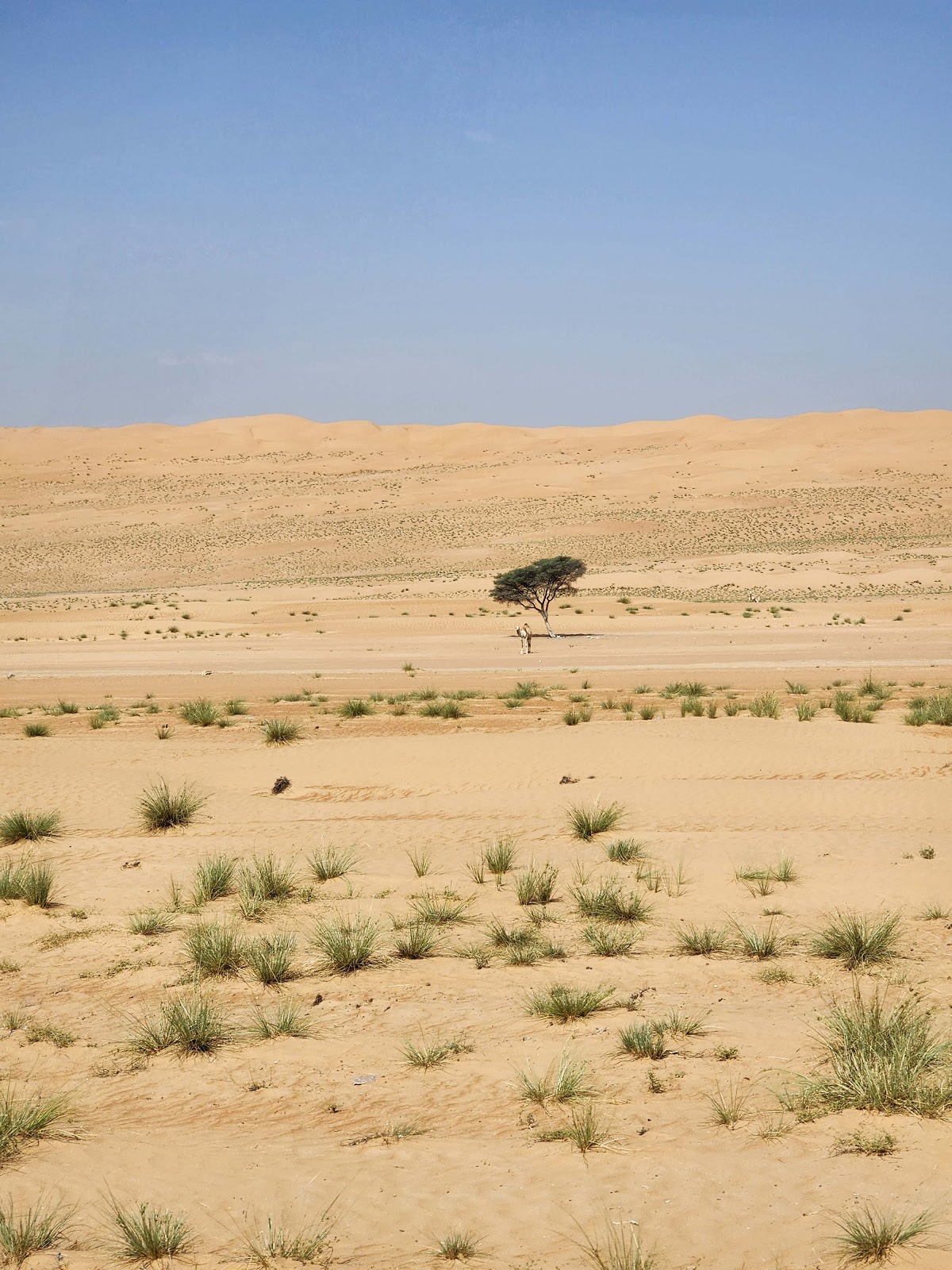
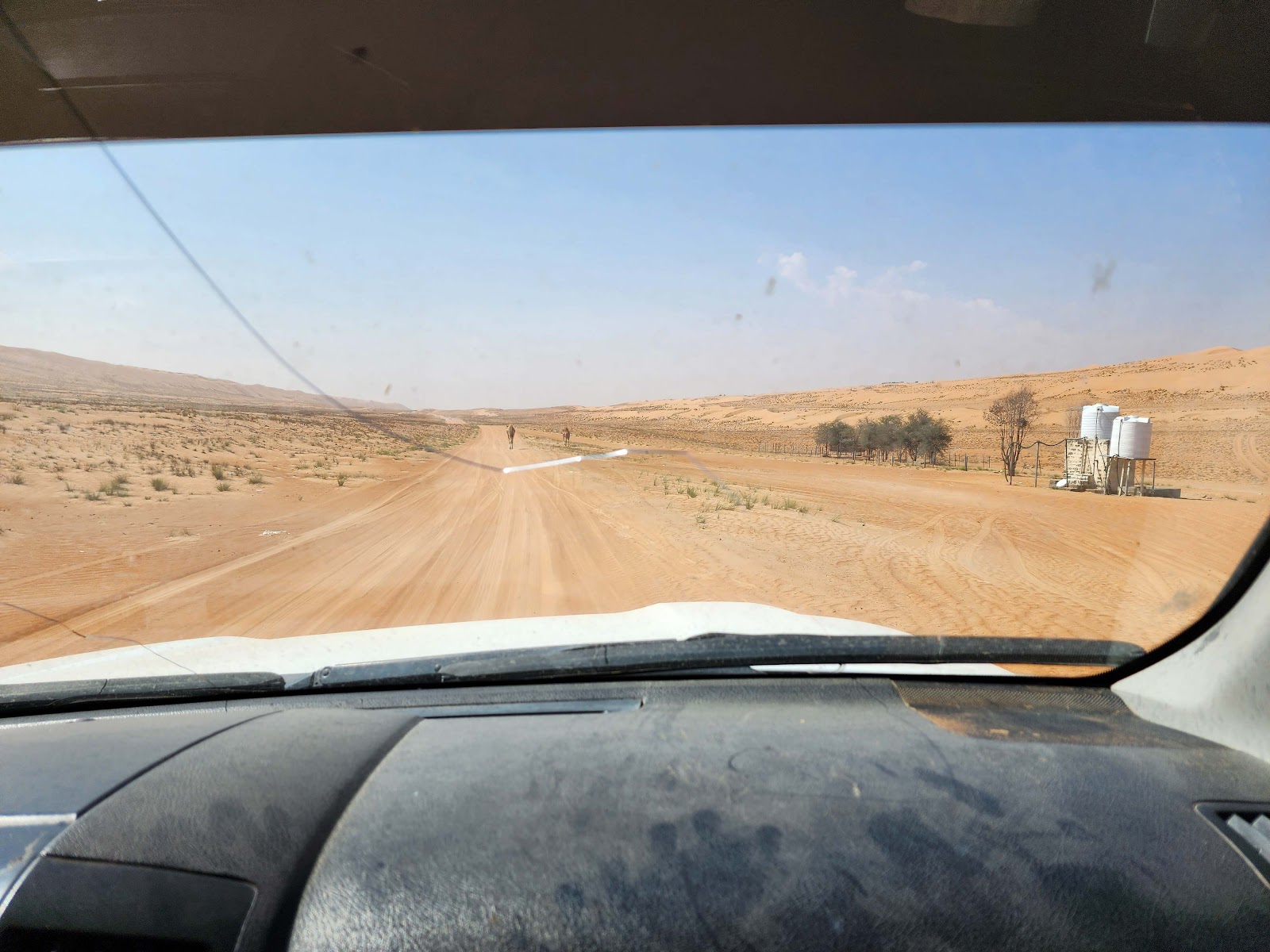
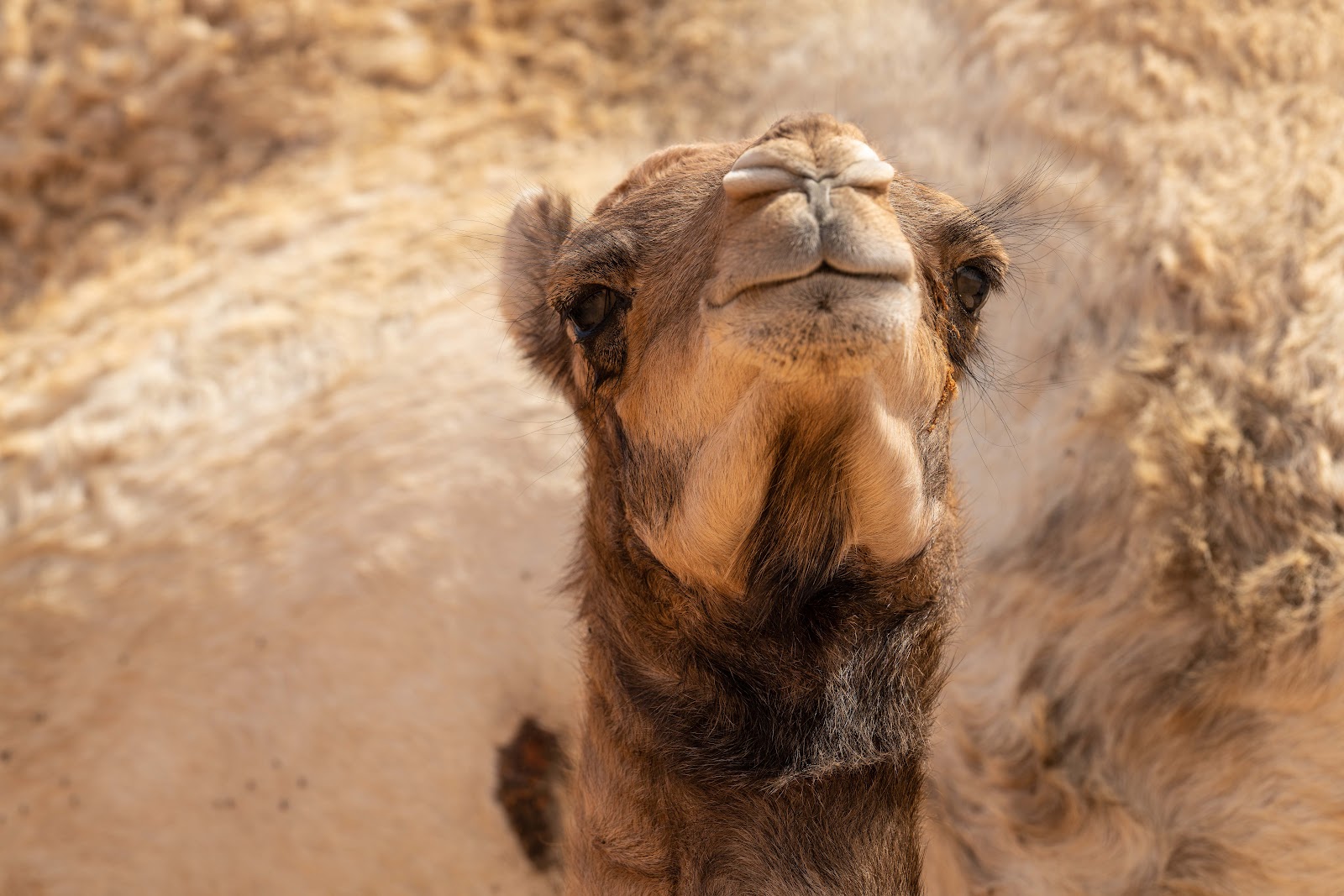
  We came across a camel and its young, still partially stuck in a post birth sack.  He declared that the camel was one year old.  I asked permission to take out my camera and took a bunch of pictures, along with one video.


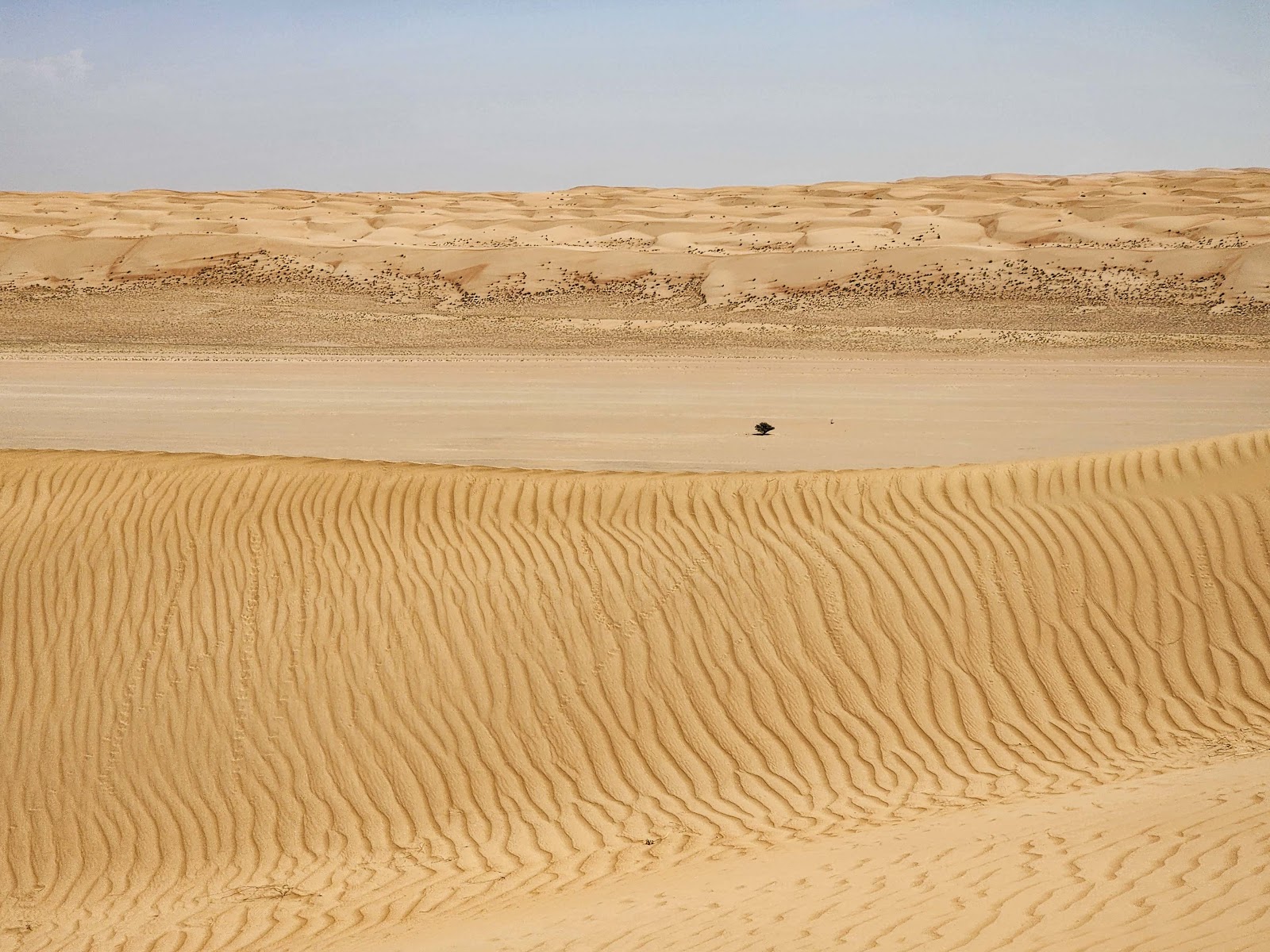
  We drove over the dunes into the valley adjacent.  I asked him if the entire Empty Quarter(name for the entire desert area) was structured in alternating valleys and dunes.  He said it was.  I also learned that each set of Dunes had its own name, and if a car were to break down, this would help identify to a rescuing party where to go.
  I shared the story of Miles and I, and in return, he shared that he was twice divorced, but once was only for an hour.  
  Eventually, we found his pregnant camel, who was no longer pregnant.  The baby was two weeks old and walking confidently.  We stepped out of the vehicle.  He examined both camels and fed dates to the mother.  I asked him at what age the baby could be given dates.  I didn't write down the answer, but I believe it to be after a few months.  I took the opportunity to take photos and a video.

Feeding dates.

  We continued in search of the second camel, driving towards the camp, but in this neighboring valley.  There was much more vegetation in this valley, with some small trees that were growing along the ground.  He said that if it had rained more, they would have grown into proper trees.


  That afternoon I returned to my routine of stretching/yoga, following by gaming.  There were portions of extreme winds, when the sand was being whipped around outside.


  That evening we scheduled a camel ride just before sunset.  We were picked up by a local man who had walked over his camels.  I guess I never quite realized just how tall camels actually are.  When they get up, you get quite a jolt upward.  Camels can hold about half of their weight, which can be 300kg(660 pounds).  We walked down the valley and then up into the dunes.  The wind was so strong that we quickly turned and went back to the calmness of the valley.
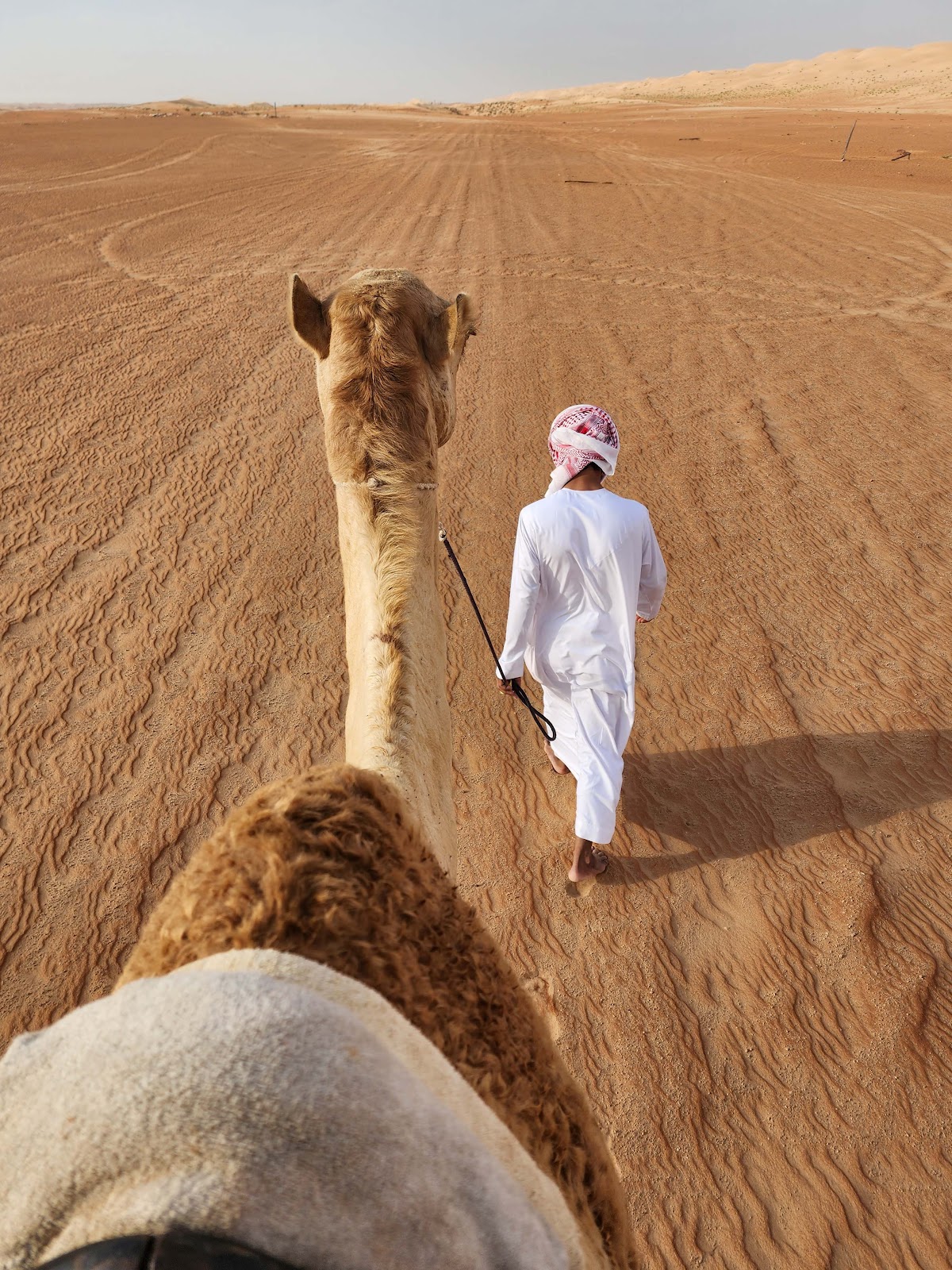

  That night there was only two other guests in the camp, a mother and her University aged daughter.  The son narrated the campfire talk.  I asked him whether coffee or tea came first/was more important to Oman.  His answer was that if you have guests over and don't have tea, it isn't a great thing, but if you don't have coffee, it is a much, much worse offense.  I asked if Omani coffee was ever had with milk or sugar.  He said that milk is never used but that dates are often eaten with coffee, which would be a sugary equivalent.  I asked him where Arabian horses could be found and if any were in the wild.  He said that mostly only rich people and the Sultan had access to the horses, and that none were in the wild.  He went on to explain that the much beloved old sultan had died of disease and the people are still getting a handle on the new one.
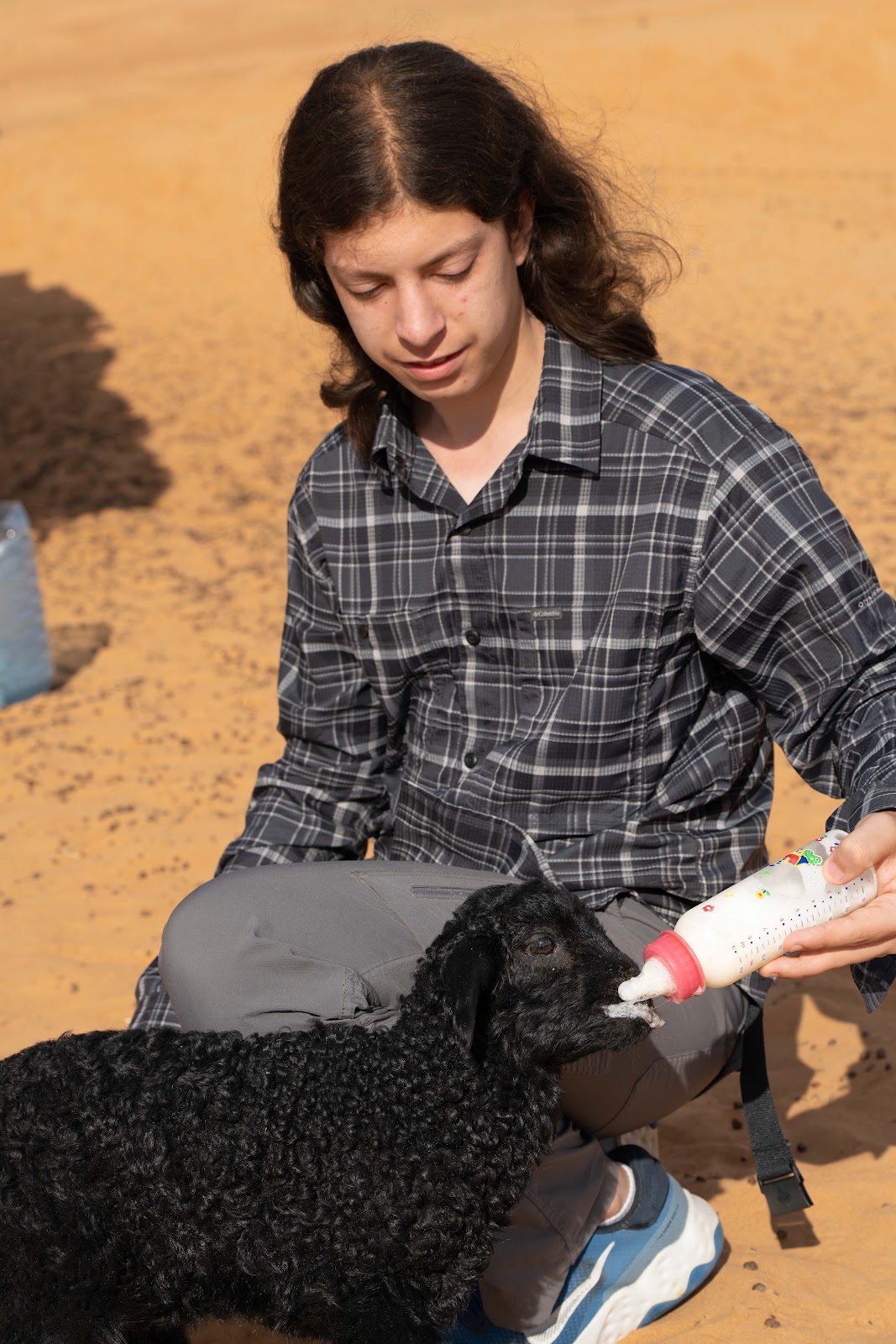
  The next morning I wanted to visit the goats with Miles.  He reluctantly came.  Neither of us wanted to milk the goats, but Miles agreed to feed a baby by bottle for a short time.

  
  We left late in the morning, for the Ras Al Jinz Turtle Reserve.

Monday, March 20, 2023

Oman 5: The drive to Nizwa, and the beginning of 3 nights in the Wahiba Sands Desert

   I need four components in order to write this blog.  I need a powered laptop to process photos and shrink them down to upload easier, the internet, and I need to have experiences worth writing about.  This has probably been my longest interim between blog posts thus far.  At first, I was lacking content to write about.  Then, I stayed in the desert for 3 nights.  The desert camp ran on solar power for lights and only had a small generator for charging phones.  The laptop died and there was no way to recharge it, so that was that.  Then, I had to get to my next hotel, go through 5 days of photos, and then write this.

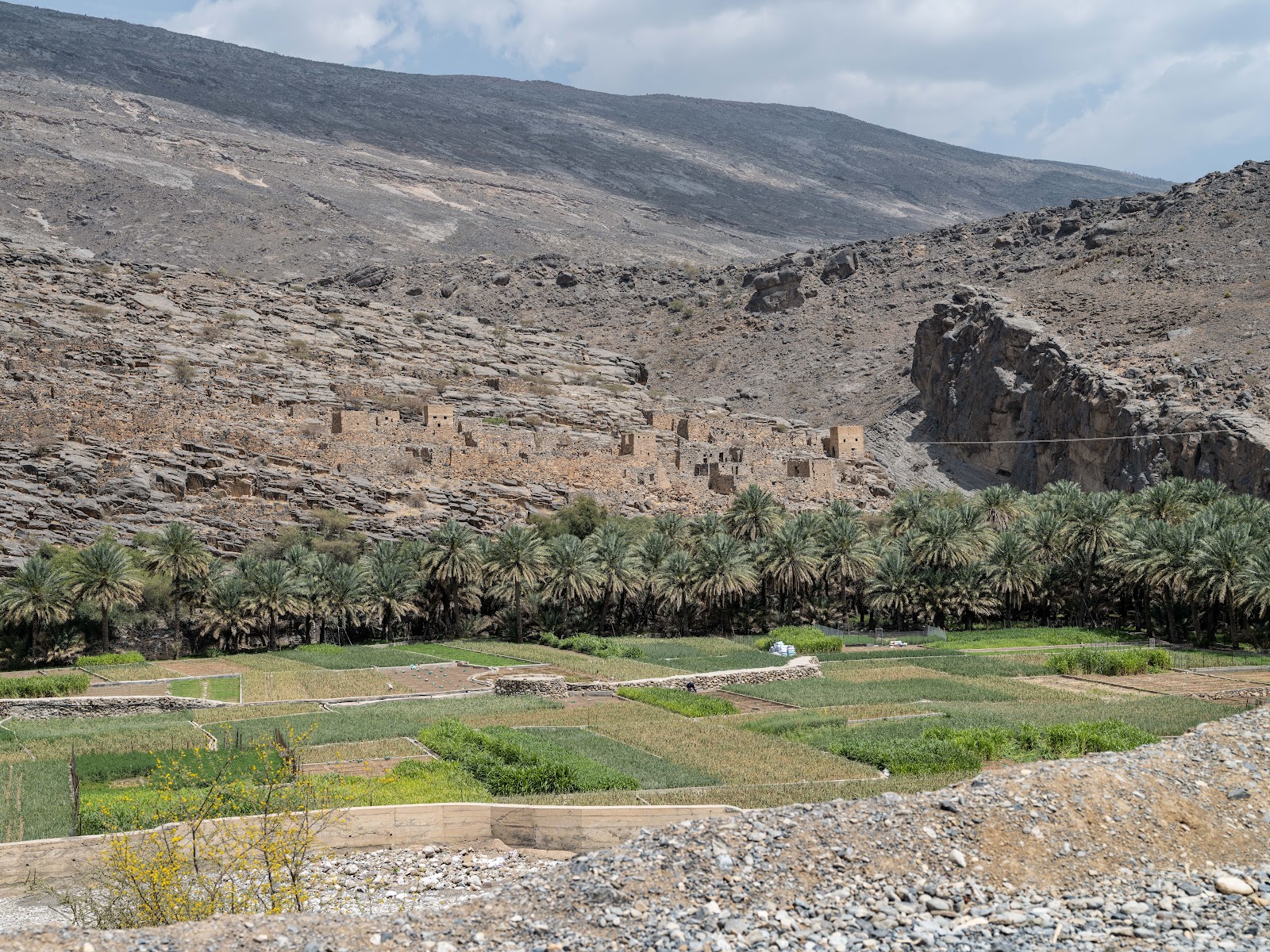
  Our next destination was the city of Nizwa.  On the drive down, I kept the camera around my shoulder and occasionally stopped to take pictures of the wonderful view.

  Back on flat ground, we caught sight of two goats sitting in a gazebo.  I absolutely loved this.


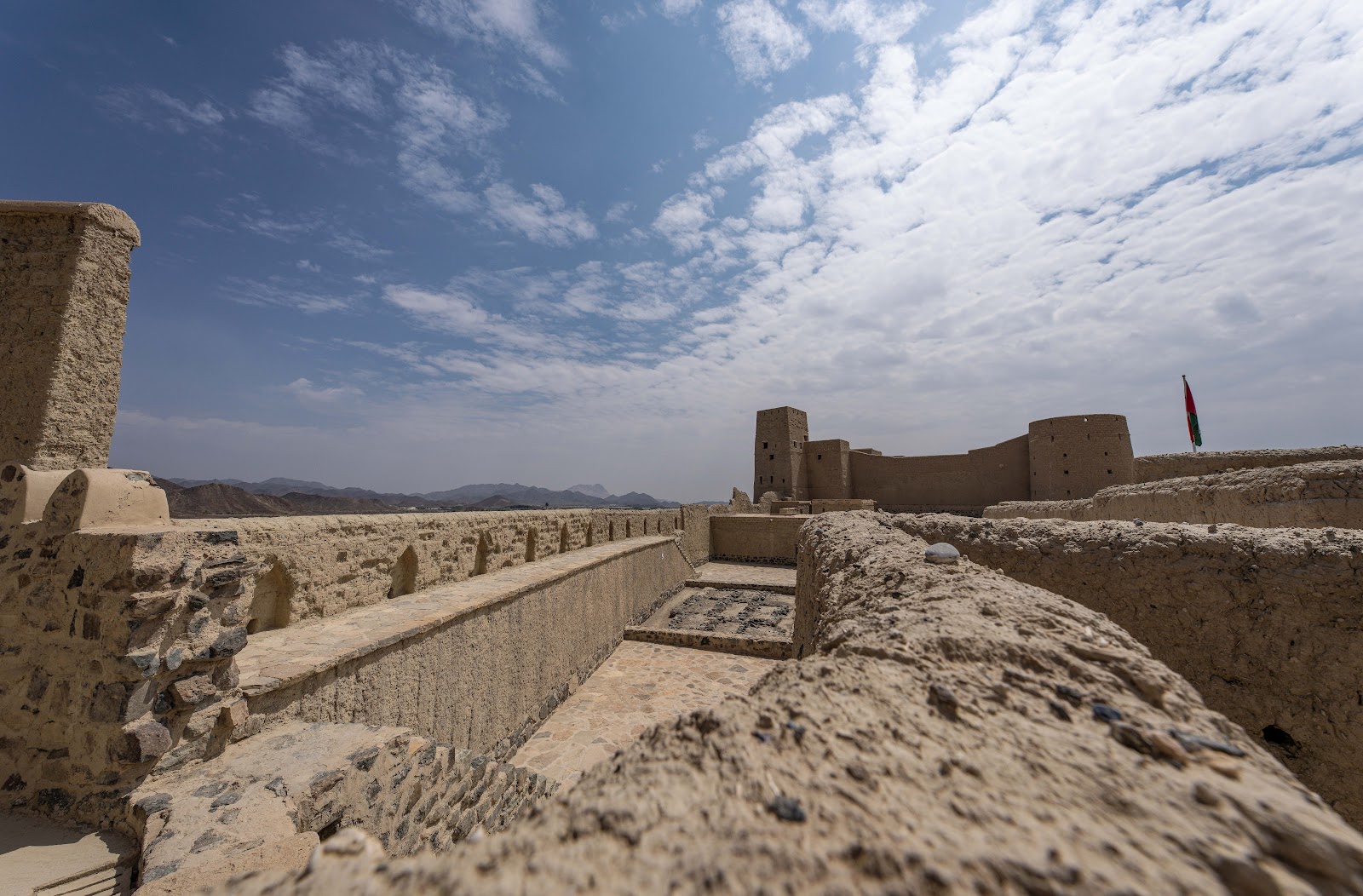
  The first stop of the day was to the Bahla Fort.  Miles discovered a small cat and decided that he would stay with the cat and I should walk around the fort.  I did so.


  There is an inner fort/castle, which was particularly magnificent.  

There was no way I was climbing up there after the balcony hike.


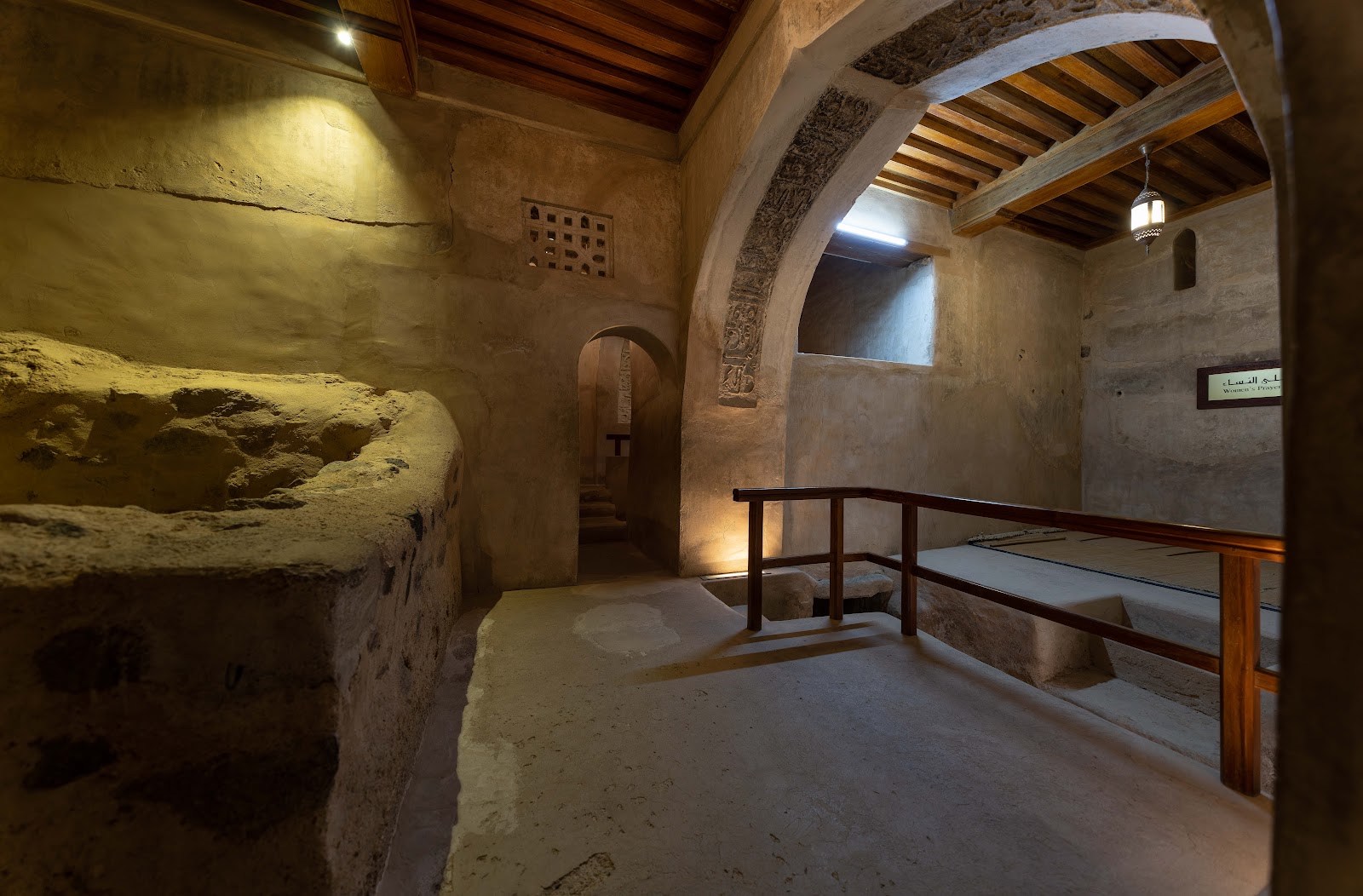
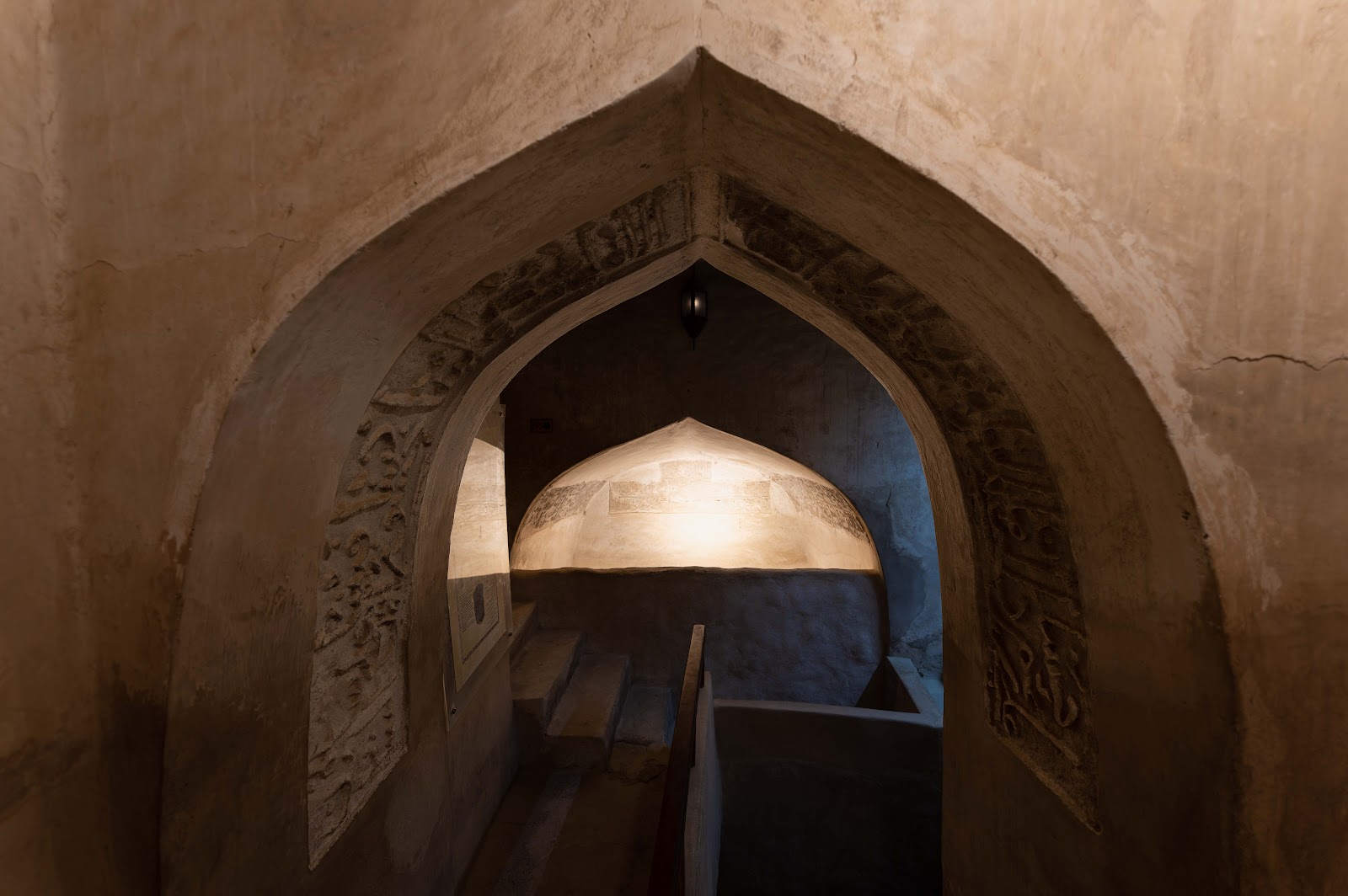
  Just ten minutes down the road was Jabreen Castle.  Miles stayed with me as we walked around inside. 


  I noticed a slight discrepancy between the jail for men and the jail for women.


  This women's prayer area was through a small doorway near the entrance to the castle.


  It was a short drive to the town of Nizwa.  On the way, we passed what looked like a magnificent mosque.  I looked it up on Maps after we had reached our destination and planned to visit it on the way to the Wahiba Sands Desert.  The mosque was named the Sultan Qaboos Mosque in Nizwa, and it got rave reviews.  I could not find a site for it but reviews said that it would be open every day.  Unfortunately, we arrived at 11:20 when we later departed Nizwa, and were told that it was closed to visitors at that time.  I should have asked the hotel workers to confirm the time.

The only picture I was able to get.

  Nizwa turned out to be the most disappointing location of the trip.  The old town has a fort, a reportedly better souq than Muscat, and an old town.  The hotel itself was pretty nice, but the old town was more of the abandoned variety, with heavy random construction throughout.  The first night I tried visiting the souq, which was a disjointed set of clustered buildings.  None of them had much on display and many of the shops were closed.  I could not find a shop on Maps that had a dishdasha.  I ended up spending time on my laptop, near the pool, as I could not find much to do, although I did visit a cute ice cream shop across from our hotel.

View from the patio of our room, to the pool and hotel.

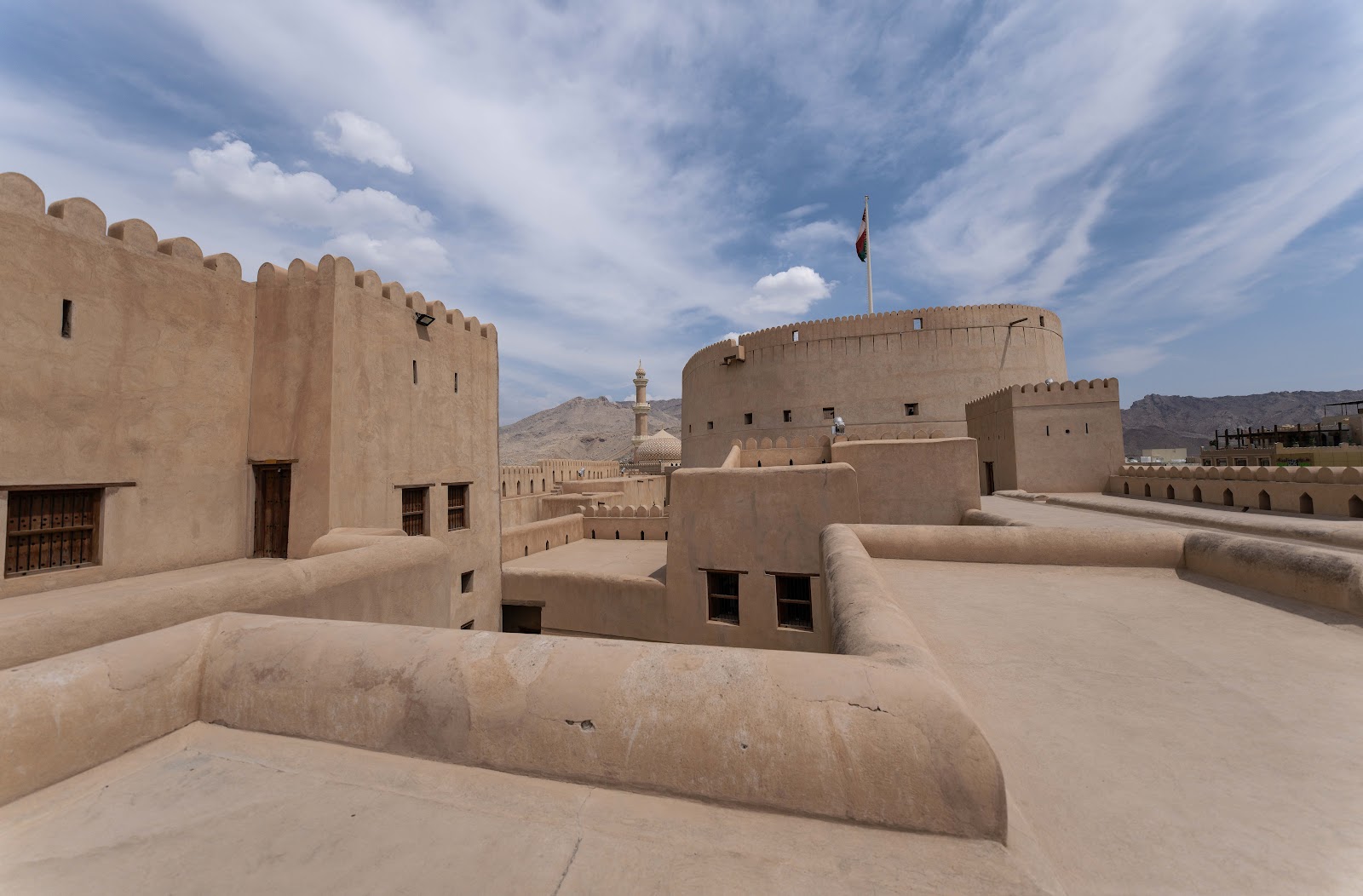
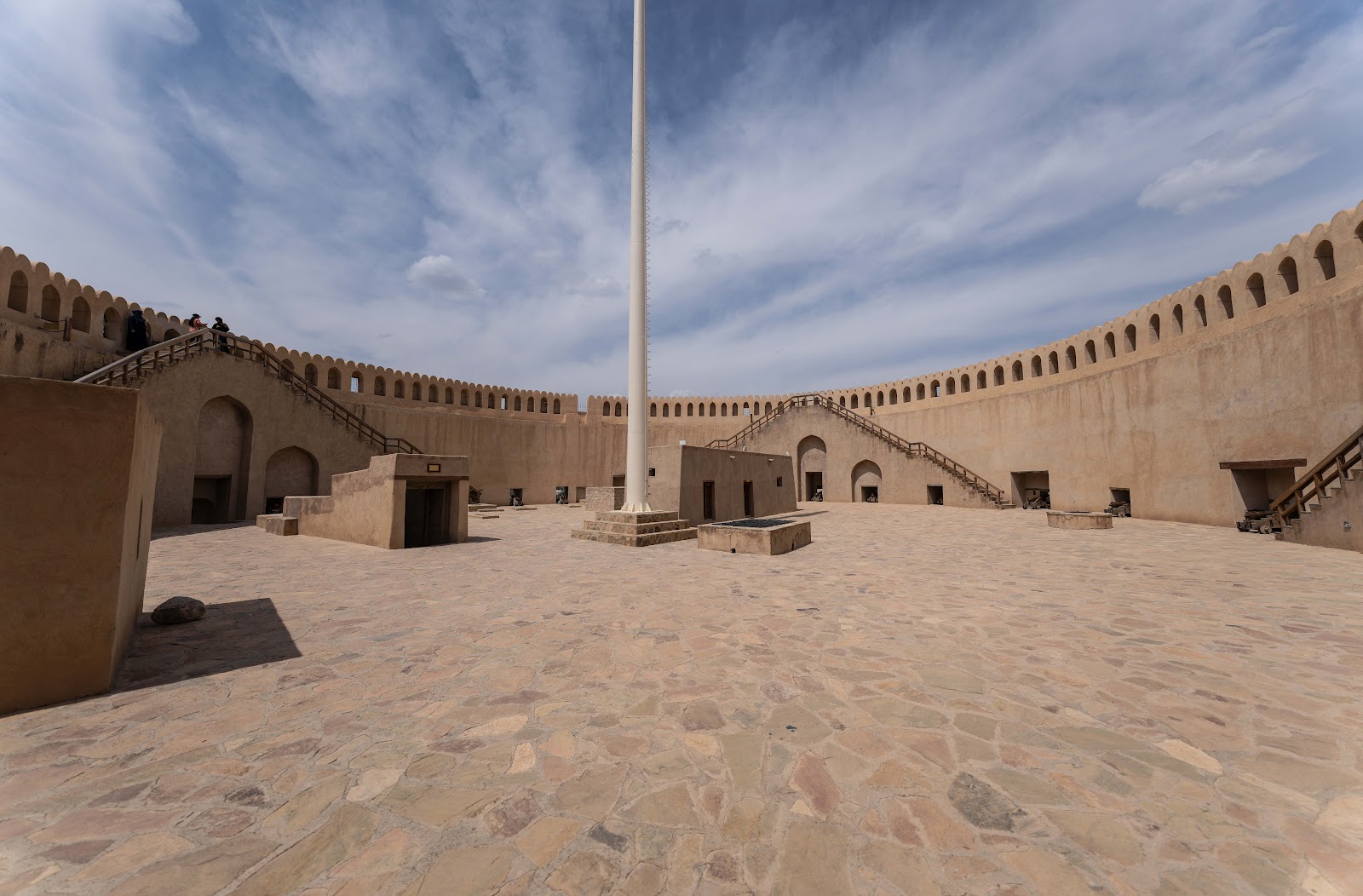
  The next day I walked five minutes away to see the Nizwa Fort.  It was the most expensive tourist site to visit of the trip.  There was a tall, round portion, that you could climb to the top, and a few buildings with a view of the Al Qala'a Mosque across the street which did not allow visitors.


  I visited the adjacent garden, which had positive reviews, but was in actuality just some weeds and a tied up cow and goats in a cage, neither of which made me pleased.  I tried the Souq again, and entered the large building in the center, which focused around food.  It was largely empty of people, with many vendors missing from their booths.  By wandering the alleys, I came across the tailor shop street, which had shpo after shop of tailors.  I felt that there would not be time for them to make me a dishdasha, since I would leave the following day.  Perhaps if I had discovered them on the first day I would have given it a try.  I continued on to a coffee shop, which served flat white and had a nice view up on what appeared to be part of a city wall.  I tried visiting the Al Shahba Shopping Centre, as an alternative to the Souq, but it was just half closed stores and half jewelry stores.

  I was happy to leave Nizwa.  We tried the mosque, but were turned away.  We journeyed two hours to a meeting spot, where we parked our car and were transported across the dunes to the Bedouin Rustic Camp.

  We would be here for two nights.  We were given the option to take a tent or a room in the building.  We instantly felt the intense heat inside the tank and chose the building.  Our first act of business was to walk toward the dunes before sunset.  Between us and the Dunes we found a large herd of goats.  The baby goats attached themselves to Miles.  The herd began to move on, but three goats in particular kept following Miles as he and I continued toward the dunes.  Miles felt bad and decided to lead the goats back, and then went to our room.  I continued onward.


  It was incredibly windy at the top, which made taking out the cameras rather difficult.  I tried to minimize the time that I brought them out.


    According to the schedule board, dancing was at 6:30.  I had no intention of participating, but I showed up to watch.  That first night there were two younger couples.  The camp has a whole wardrobe of Bedouin clothes, which they use to dress up the guests and teach them two dances.  One of the dances feature men(father and son in this instance) with mock bendable swords, which they used to attack each other while using their sandals as a shield.  This is part of a dance that generally has spectators dancing while holding hands and going around the mock fighters.
  Next was dinner, followed by time in front of a campfire.  The first night, the twenty three year old son of the owner hosted the campfire.  He spoke about how the Bedouin people were 10,000 in 1970 and had dwindled to 500.  He spoke about the ways that camels helped in the old life, as well as how they still benefit them to this day.  In the old days, they helped as a way to transport people to Mecca.  Body parts of the camel were used for everything from socks to dew collectors to a writing board.  Camel urine and milk were used as medical remedies.  He spoke as well, about how smart camels are and that camels form a strong bond to the humans and have been known to cry with joy when they return after being away for a while.  In modern days, camels are used in highly profitable camel races, which are popular in the region, as well as for tourist purposes.
  He also told the story of how his father, when younger and poorer, came across two English tourists and offered to help them cross the desert, despite knowing only half of the way.  On the first night, while one of the tourists tried to film the camels, the camel mistook the noise the camera made as indication of food.  The father stepped in an slapped the camel, which made it irate.  The camel charged the father, who ran to a nearby tree and circled the tree in a desperate attempt to escape harm.  He eventually discarded his dishdasha, which the camel confused for the human himself.  Once he stamped out the dishdasha, he calmed down.
  Then, he opened it up to questions.  Others were quiet, so I decided to ask a few.  I asked if young people were continuing to live the Bedouin lifestyle.  He explained that the vast majority are going to cities and going to University, including him and his siblings(6).  I asked about how young people met their relationship partners and discovered that it is almost entirely in person.  Couples have to be pretty secretive and cannot progress physically.  They do not have arranged marriage however.  Most people marry between the ages of twenty three and twenty seven.  
  He smoked tobacco in a pipe, and explained that this is not allowed by Islam, though it is much more accepted than alcohol consumption.  I commented that the goats around the country are not tagged, and asked him to explain the system.  He said that they wander on their own, but come home for food like dates.  He might have also described a type of burning/branding to mark, but I am not quite sure I understood that entirely correctly.  I asked him what the Omani people think of the influx of tourists.  He said that Oman, in fact, had booming tourism in 2019, but it has only rebounded by forty percent since Covid.  He said that tourism means that people think Oman is beautiful and it is good for business, so the Omanis like it.
  We used usb battery powered miniature fans to help sleep that night.