Before continuing where I left off, there have been a few things I have forgotten to mention:
- The buffet dinner one night in Jebel Akhdar served an Egyptian dessert dish called Omali. It was very similar to bread pudding. I liked it. Miles tasted it but scoffed at its consistency.
- I took great care to order long sleeved shirts and long pants for both Miles and I, because reading up on Oman indicated that dress code was fairly strict. Even though there would be more leeway with Miles, once you hit puberty, you are considered an adult for dress purposes here. Other visitors don't seem to care in the slightest. They wore short sleeves and shorts, which are kind of expected, but I also saw women in yoga shorts and other completely inappropriate and tone deaf dressing.
- In the hospitality and service industries, there are every very few Omani workers. It is almost all foreigners, from Africans to Indians, and even Chinese. It has been a waste that I learned about fifteen Arabic phrases, because there seems to be noone to interact with that knows the language.
- There is trash everywhere. Trash has been on nearly every hike. In streams, wedged into rocks, it has been inescapable. Even when I pulled onto the side of the road and climbed down some rocks to a middle of nowhere spot to view the sunset in this blog entry, there was trash wedged in to the rocks and I had to maneuver myself so that the trash would not end up in the pictures. I am assuming that this has a bit to do with just how much plastic is being used in Oman by the tourism industry. Due to uncertainty when it comes to drinking Omani water, every hotel throws tons and tons of water bottles at you, from their breakfast, to dinner, to being left in your room. With all of this plastic out there, you have disrespectful tourists just dumping them wherever they feel like it.
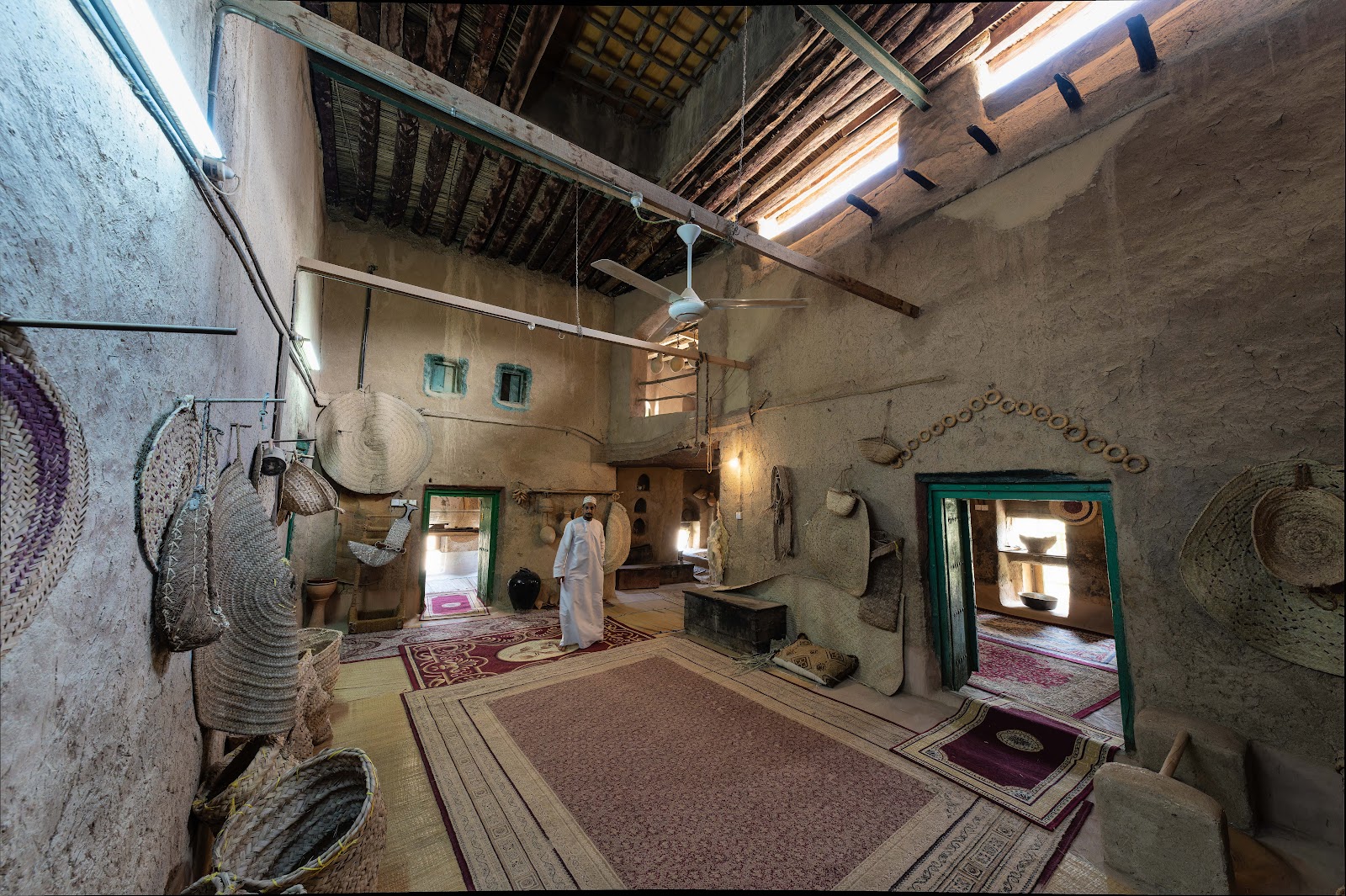
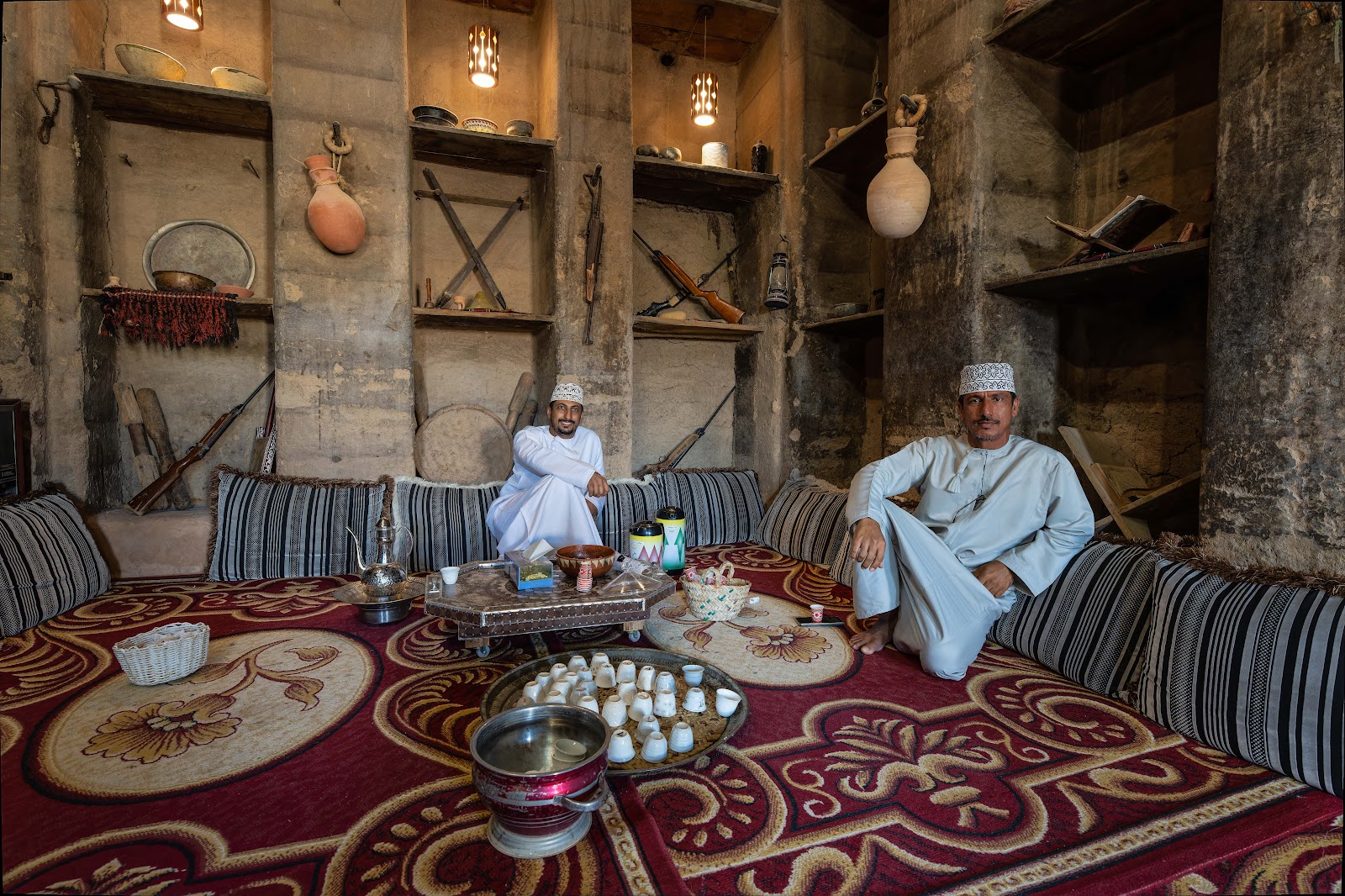
- Oman has seemingly abandoned most of its towns and rebuilt elsewhere in newly built structures. They just appear to have up and left them. So, wherever you go, you have crumbling buildings and tons and tons of attempts to now renovate these decaying structures, or just building new. Much of the renovations of older buildings, from what I can tell, are aimed at turning them into hotels, cafes, or museum experiences. I tried to look up explanations for the state of Oman, but have not had much luck. I know that they were extremely poor until they discovered oil in 1962, and then they rapidly expanded education and living standards. Perhaps this explains the mad rush out of the old towns and the old ways.
- Cats. There are more stray cats here than I have ever seen in any other country, and they are extremely skinny and not well cared for. I don't have a solution for it, but it is something that I definitely noticed. Hell, last night during dinner, a cat came over to beg for food.
- Just as in Morocco, at different times during the day, for a call to prayer. This is mostly in the bigger cities, as there is little to none in the countryside. At 5:00 AM, and as late as 8:00 PM, prayers are broadcast on loudspeakers. I find this practice to be a bit odd. Before technology, this obviously was not a thing. It feels forced, overdone, and unnatural. While researching this, I found an article about Saudi Arabia limiting the volume of these call to prayers, because it was becoming disruptive and could negatively effect the elderly and children in the area.
- Jeremy has suggested that adding a hose into my bathrooms would actually be a fairly easy and reversible process, if needed for resale.
-The Omani people that I DO end up encountering have been incredibly friendly and welcoming. They wave to you while walking on the road or in their cars. They never seem agitated if you ask for help. They also do not give off any irritation at the influx of tourists. There has not been a single moment where I have felt uncomfortable or unsafe here. Of course, this is coming from a white male, so my perception might be skewed.
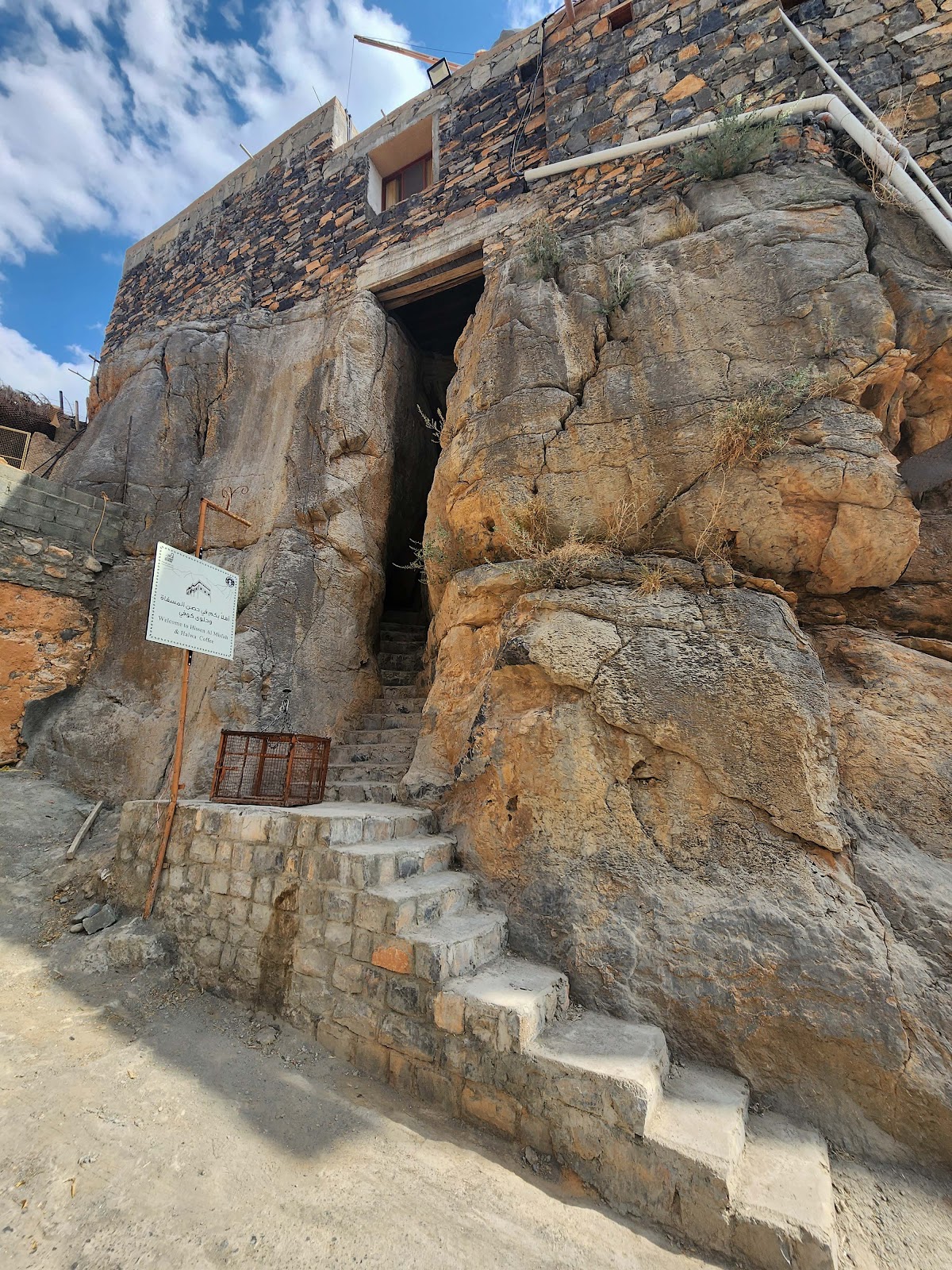
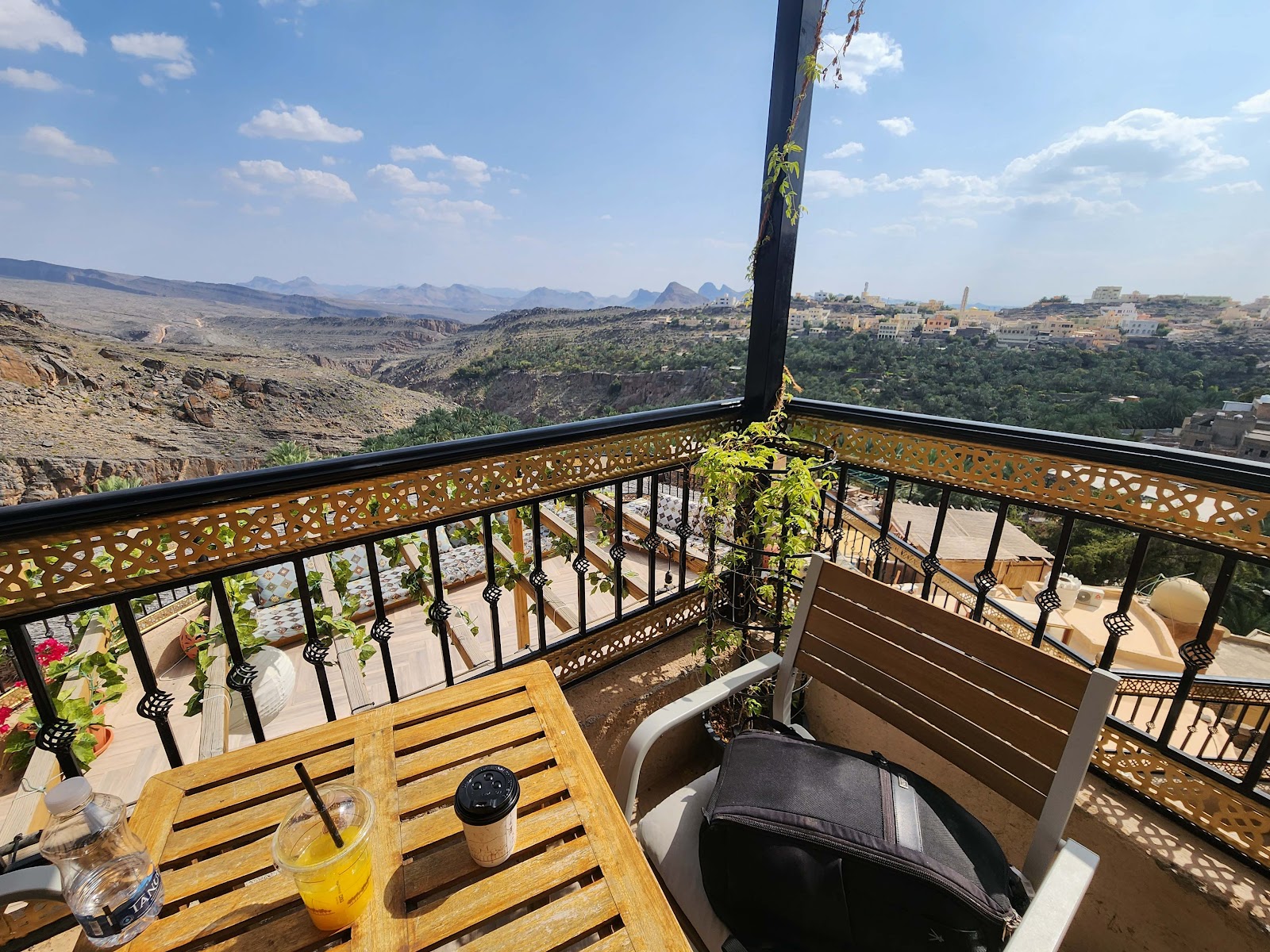
Returning to where my last blog post left off, once I was back in town, I passed this sign for a coffee shop. I could not turn down such a bizarre of an entryway, so I climbed the steps.
 |
| The steps leading down to the other side of the cafe. |
 |
| While walking to the hotel on the first day, we passed this shop, which was open at the time. it was never reopened. What found most amusing was the sign pointing to virtual reality. Because, when you think of virtual reality, you definitely think of abandoned villages in the hilltops of Oman. |
Once I was nearly back to the hotel, I saw the Omani flag painted on the wall, indicating a trail. I had been hoping to find the trail to the Spring of Misfat's Falaj system, so I decided to see if this led there.
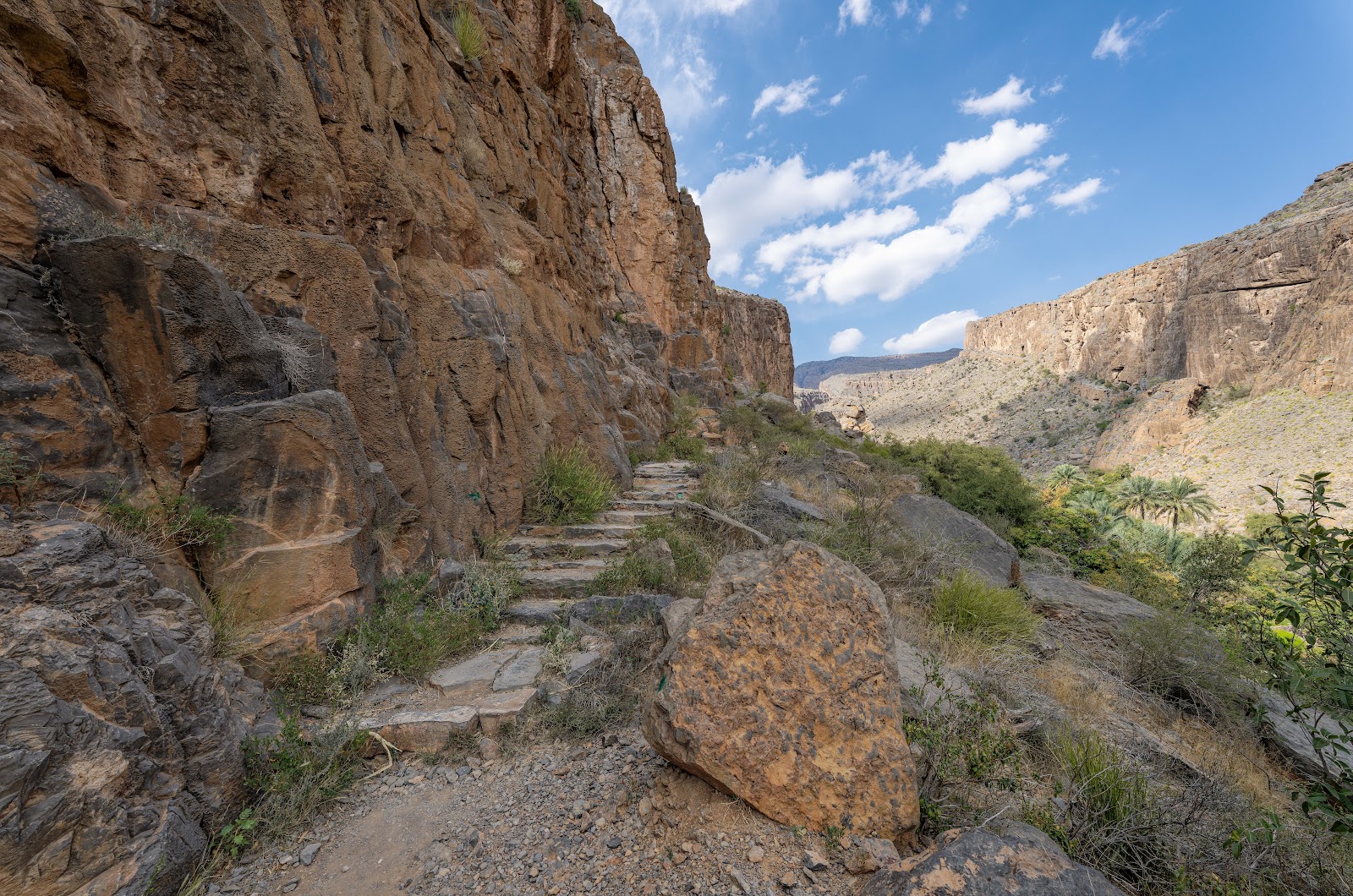
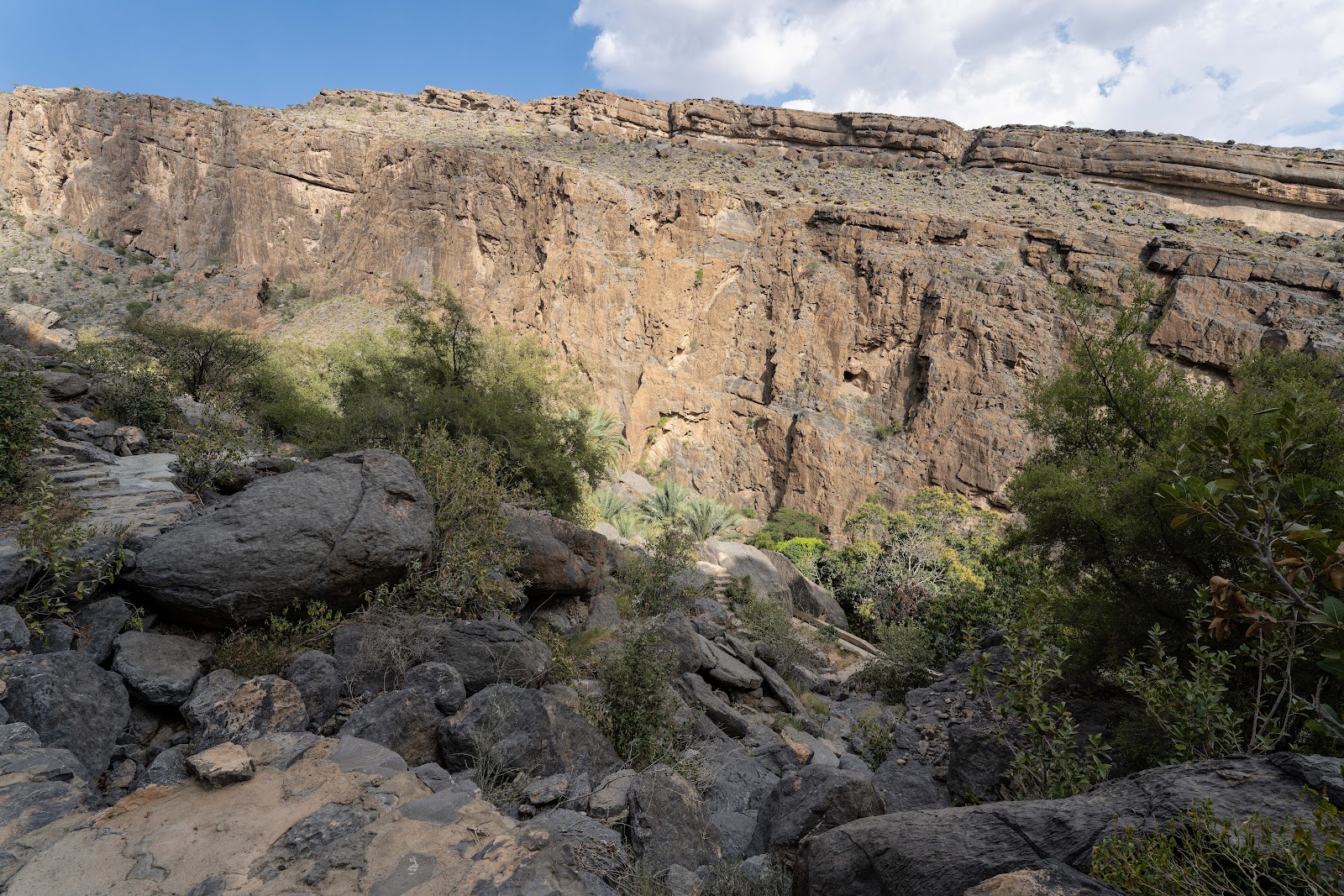


The route was an easy walk east and north of the village, along the mountain's side. The water had little fish swimming in it. Then, it just ended at a rock face, where the water kept going. It was way too tight of a space to enter. I didn't take a picture of it because it was so unspectacular. There were steps next to the waterway, with nothing on either side of it. After looking around for an alternative path, I decided to walk up the few steps and then down the other side. It simply deposited me in a dead end surrounded by boulders.


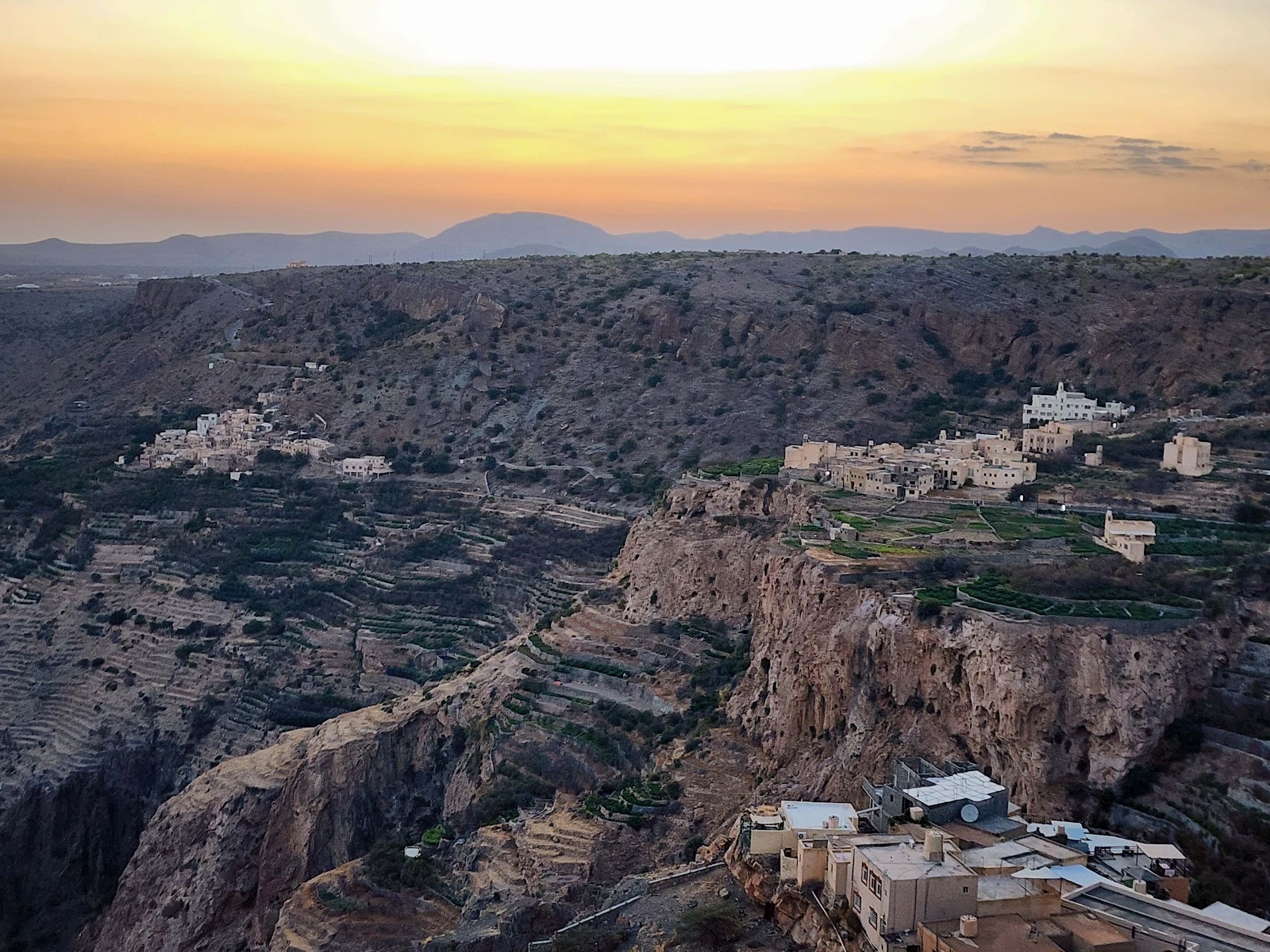
The new town above Misfat blocks the sunset view, so I drove five minutes out of town. I found a place to pull over and walked down to some rocks to watch the sunset.


The next day we drove an hour and a half to Jebel Shams. We had to drive on a dirt mountainous road for about fifteen minutes before it became paved again at the top. They allowed us to have an early check in at our hotel, and then left shortly for the Balcony Walk. The Walk itself was another 10 minute drive away, but it only took that long because it was mostly an extremely bumpy desert road. Strangely, getting up this mountain did not require four wheel drive, but it definitely made more use of it than Akhdar.
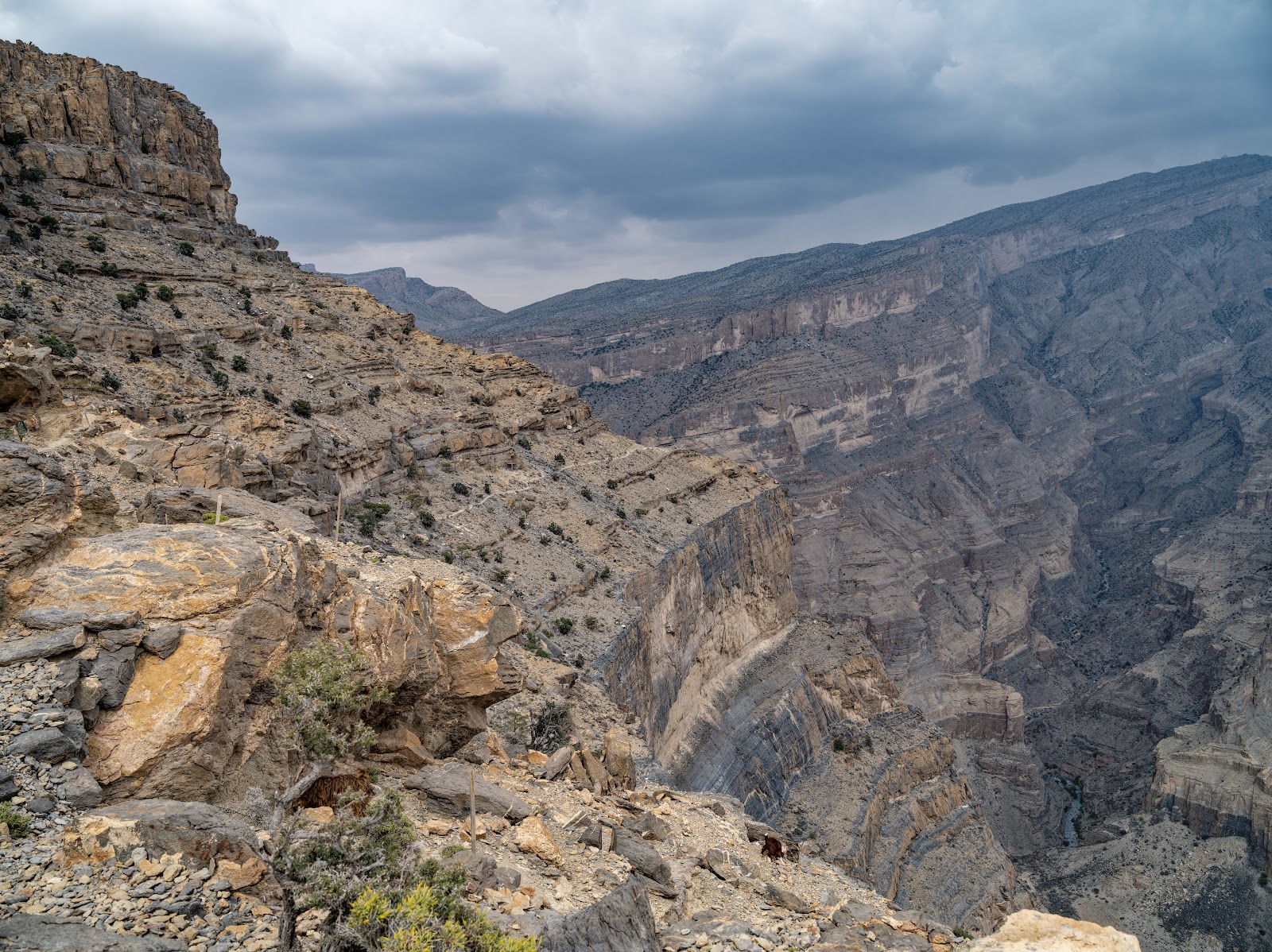
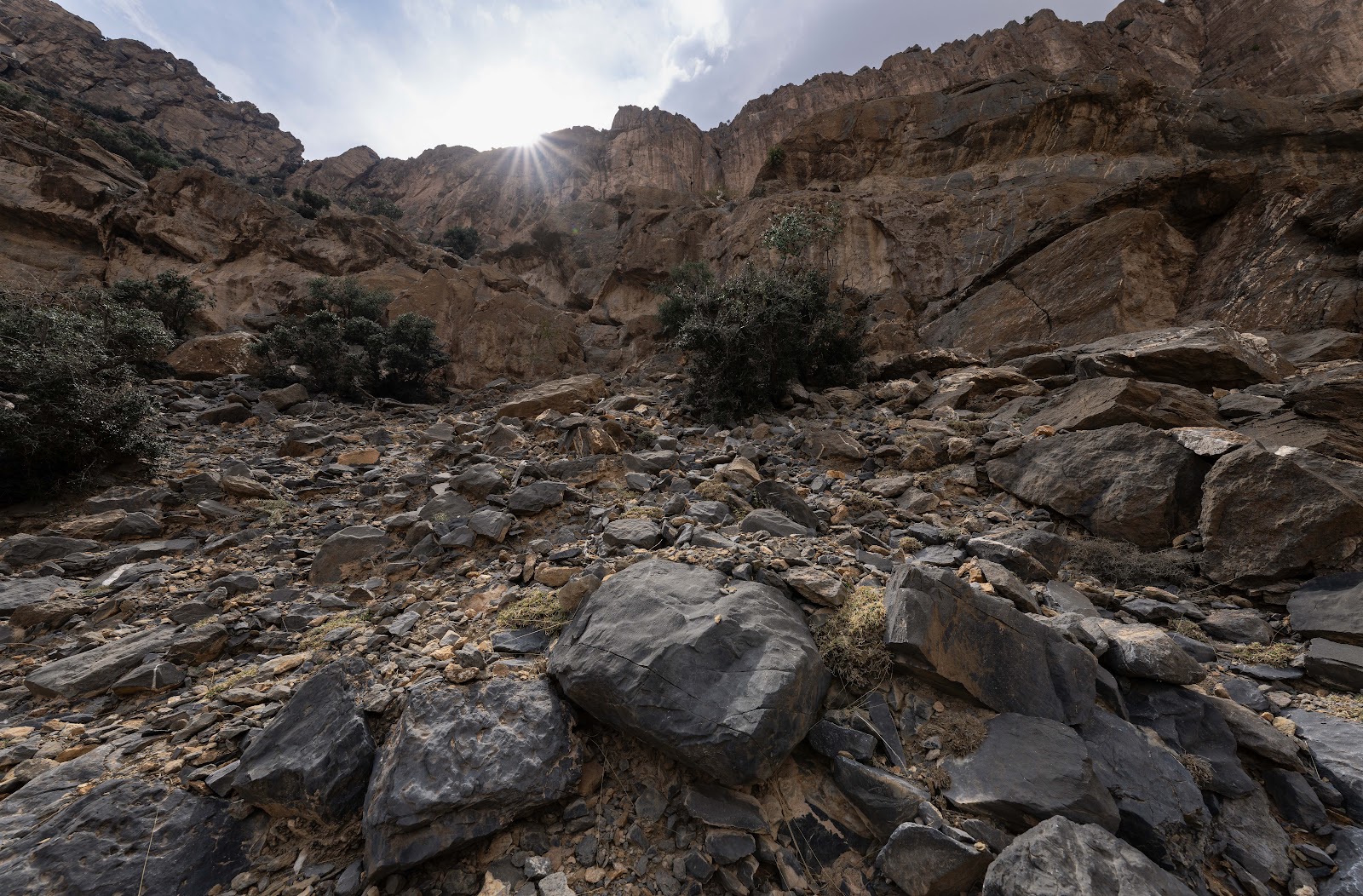
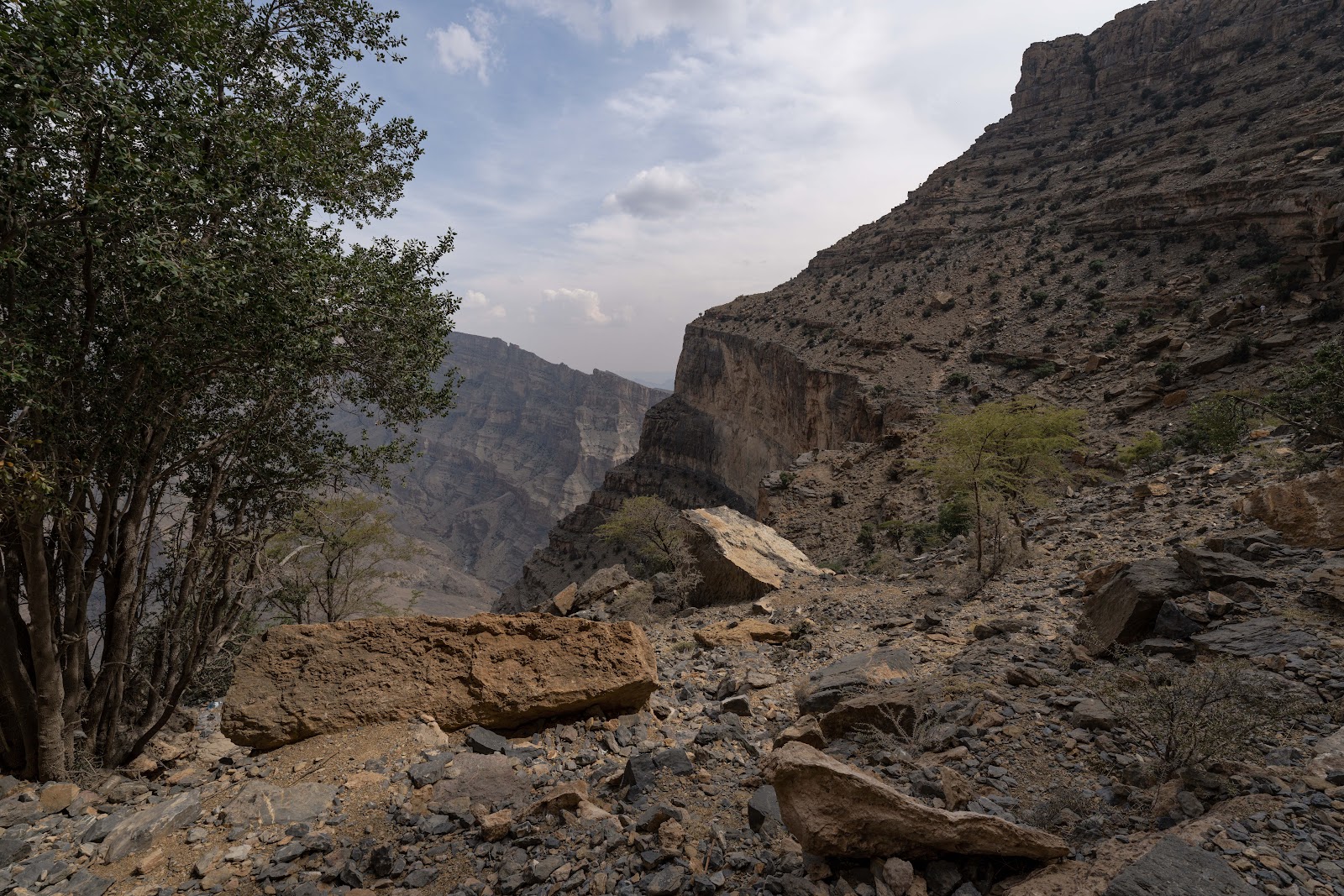
We were extremely high up, on a well made path, that mostly wasn't completely sheer on one side, though at times it was. Miles was hesitant first but we eventually got into a rhythm. Miles wanted to lead and take it slow, so I did what made him comfortable. There was one time when he freaked out about an insect and made sudden movements and I had to grab him and admonish him that now was not the time to react like that. On the way back, he fell forward once. Otherwise, the trip was without incident.
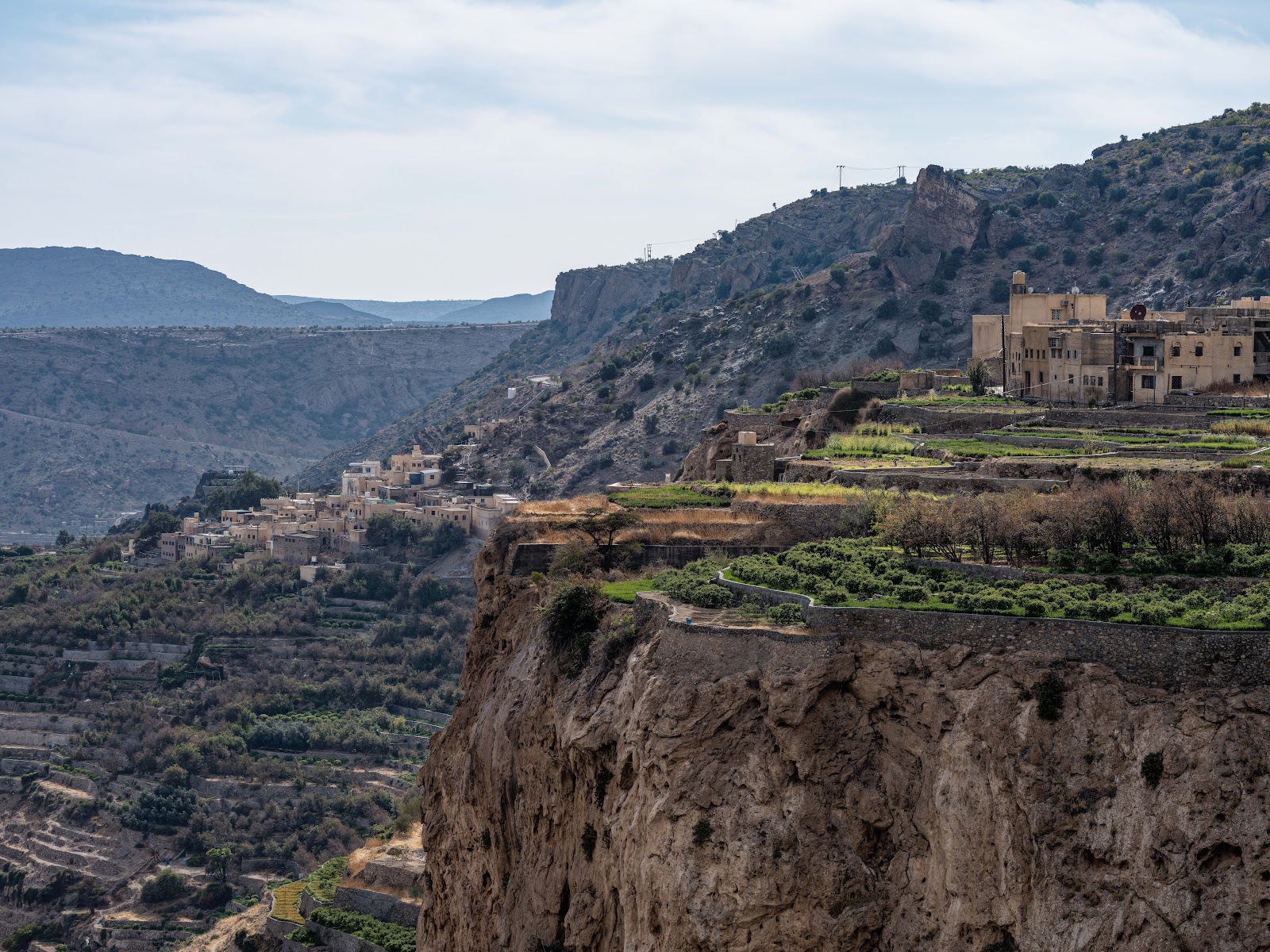
There were a few spots on the hike where it opened up into a large walkable cliffside. We ended up making it eighty to eighty five percent of the way through the whole hike. While not physically strenuous, it took a mental toll on us to deal with how high up e were and how stark the drops along the walk were. We could see the final destination in the distance, which was a tiny abandoned village on the side of the cliff(which I point out in one of the photos below). We had seen a majority of the views, and we accomplished what I wanted to accomplish, so we headed back.
 |
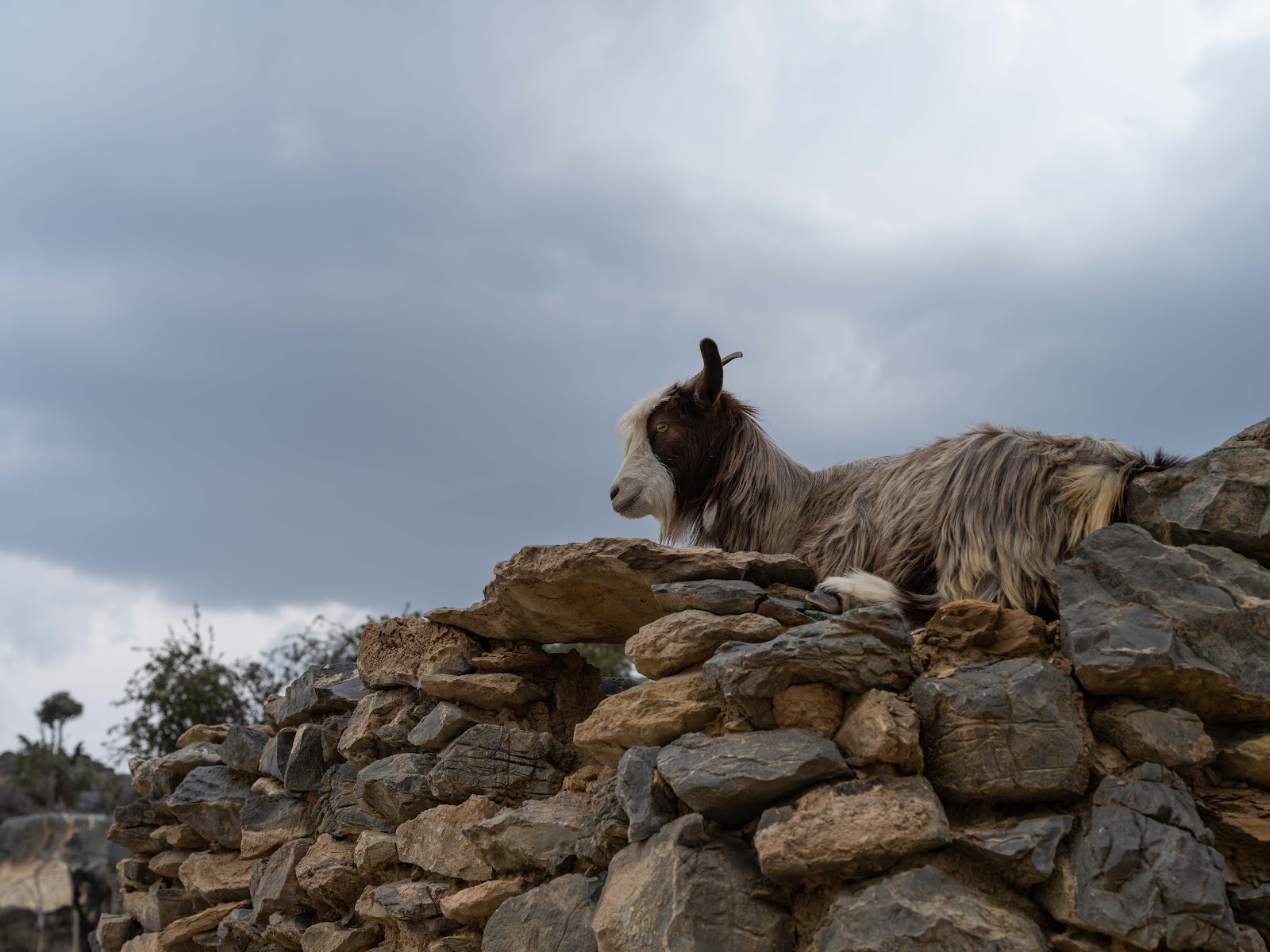
| A goat greeted us at the entrance to our hotel. |


 |
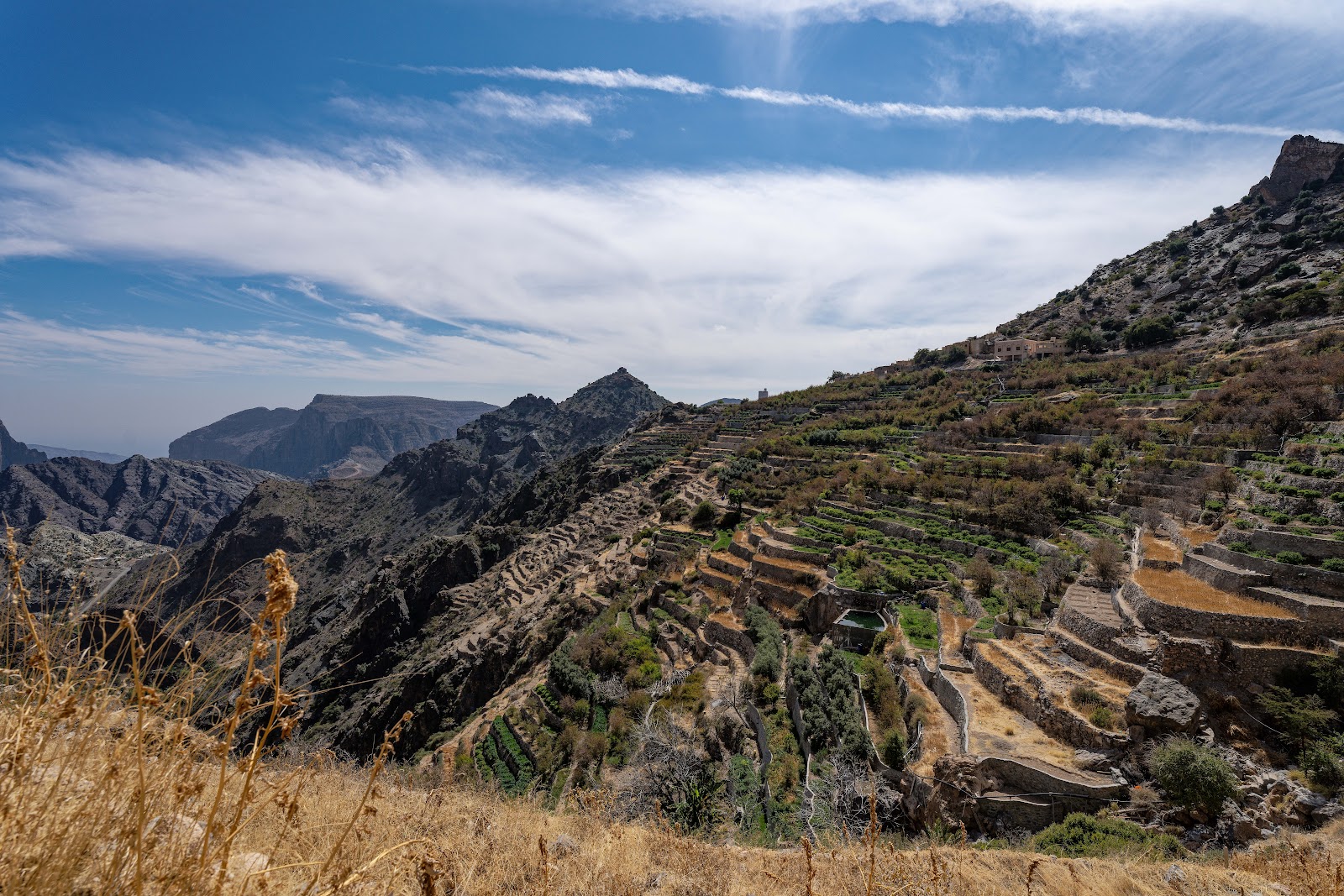
| If you squint, you can see Miles there. |




 |
| This is a heavily cropped picture to show the abandoned village that we didn't reach. This village is within the previous picture, which shows the final part of the path that we didn't venture onto. |

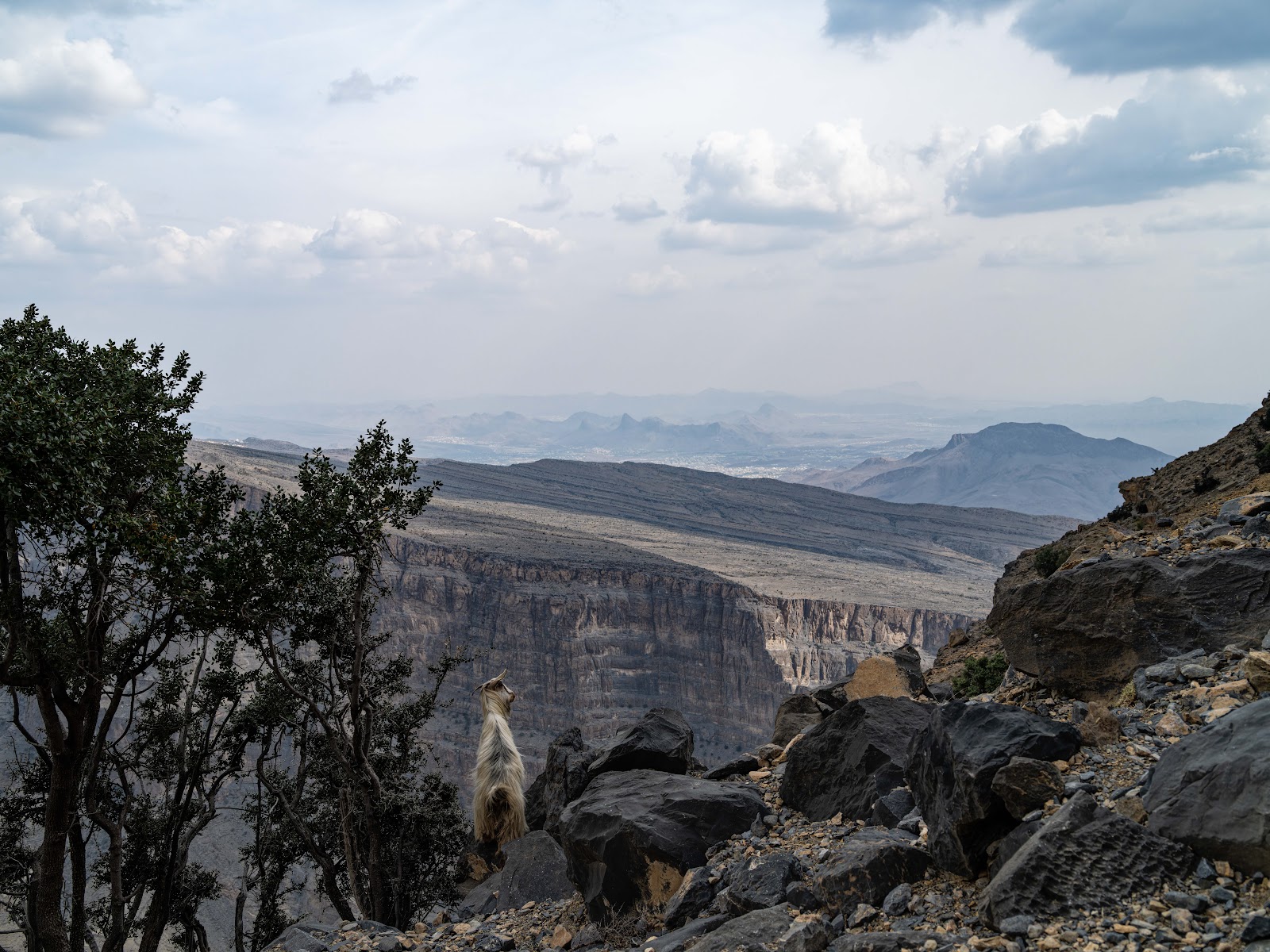 |
| A goat that we encountered on our return trip, back near the beginning. |